T: +86-13758587081
E: longtaiyarn@sina.com
E: longtaiyarn@sina.com
Longtai Textile, Building 58, Yuwang Xincun, Datang Street, Zhuji City, Shaoxing City, Zhejiang Province, China.
Views: 0 Author: Site Editor Publish Time: 2026-09-30 Origin: Site


The functional lifespan and comfort of any knitted sock depend directly on its core elasticity. This reality makes the choice of elastic base materials a highly critical manufacturing decision. Everyday consumers expect ultimate shape retention and snug fits across all footwear styles. Selecting the wrong tension, denier, or covering method quickly leads to high defect rates like "spandex grinning". These specific errors also cause poor dye absorption or premature sagging after a single consumer washing. Resolving these foundational issues early prevents massive production waste down the line. This guide provides a transparent, specification-driven framework for evaluating and shortlisting the right spandex covered yarn. Doing so helps you optimize hosiery production runs effectively. You will learn exactly how to balance raw material traits against your specific machine capabilities.
Match structure to quality tiers: Single covered yarn (SCY) is cost-effective for mass-market socks, while double covered yarn offers the balanced tension required for premium and medical-grade hosiery.
Prioritize covering compatibility: Nylon spandex yarn provides superior softness and dyeability compared to polyester, directly impacting the final hand-feel and visual consistency.
Verify technical specifications: Procurement must align denier ratios (e.g., 20/70 vs. 40/75) and draft ratios with the specific gauge of the knitting machinery to prevent downtime.
Mitigate production risks: Factor in storage shelf-life and pre-production sample testing for shrinkage and wash-fastness before committing to bulk orders.
When you manufacture socks, the outer fibers typically get all the attention. Consumers actively touch the cotton, wool, or bamboo exterior. However, the hidden core dictates true form retention. It tightly controls the recovery rate after active movement. It fundamentally determines overall product durability. Poor core materials easily ruin great outer designs.
A successful material choice balances multiple operational factors perfectly. You want to minimize unexpected machine downtime. You need entirely consistent dye uptake across massive batches. You ultimately aim for an extremely low consumer return rate. Evaluating elastic sock yarn requires looking far beyond basic stretch capabilities. It heavily involves understanding microscopic friction dynamics on the factory floor.
Bare spandex creates enormous friction against metal knitting needles. This intense friction frequently causes thread breakages. It slows down production speeds dramatically. Fully covered variants resolve this issue beautifully. They wrap the sticky inner spandex inside smooth outer fibers. This precise covering process allows rapid, smooth knitting. It also protects the delicate elastomeric core during high-temperature dyeing processes.
You must weigh performance traits carefully against your required specifications. Utilizing bare fibers remains exceedingly rare in high-quality hosiery. The risk of needle damage simply runs too high. Covered materials offer protective sheathing. They ensure your final garments survive rigorous consumer wear and frequent hot washing cycles.
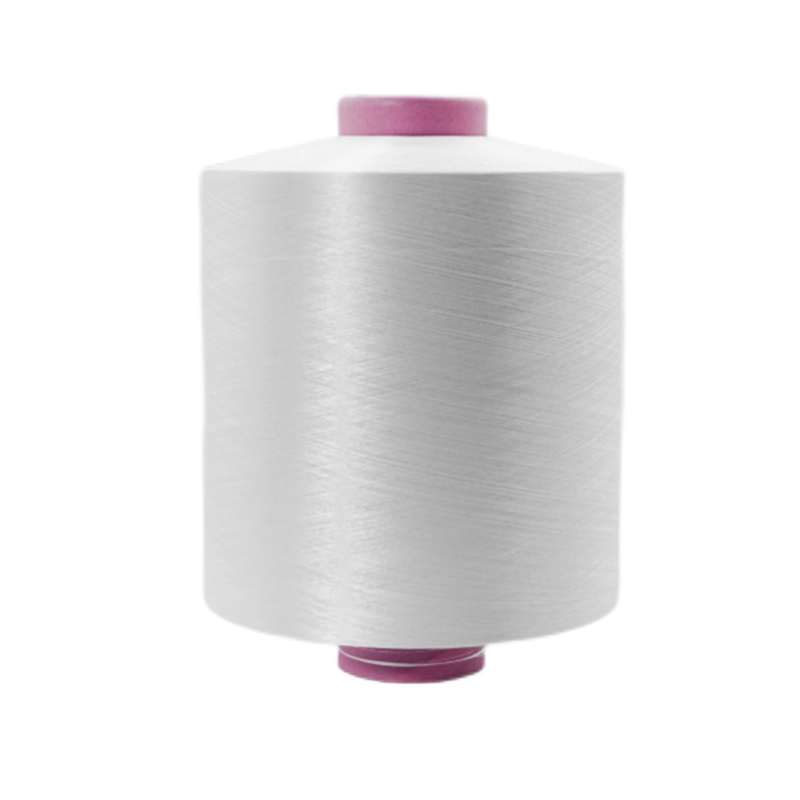
Understanding structural differences prevents costly manufacturing mistakes. Each wrapping method dictates how the final fabric behaves under tension. You must align the yarn structure directly to your intended sock quality tier.
SCY yarn stands for Single Covered Yarn. Facilities wrap exactly one layer of outer fiber spirally around the central core. This specific method remains highly efficient to produce. It feels exceptionally lightweight in the final garment. You will see it used extensively in high-volume athletic socks. It suits standard everyday casual socks perfectly.
However, this single-wrap structure creates inherent torque. The thread naturally wants to twist upon itself continuously. You must carefully calibrate your machine tension settings to accommodate this twist. Ignoring this vital calibration causes noticeable fabric skewing. The final sock might actually twist awkwardly around the wearer's foot after laundering.
In contrast, conventional double covered structures utilize two distinct layers. The manufacturing process wraps the first outer fiber in an S-twist direction. It then wraps the second fiber in a reverse Z-twist direction. These opposing physical directions cancel out the torque entirely. The material remains perfectly balanced and neutral.
This balanced structure provides a significantly smoother surface texture. It ensures much higher durability under intense physical wear. It delivers highly reliable, balanced compression. However, production speeds for this material run slower. It also requires higher raw material input per kilogram. You typically reserve this specialized option for premium dress socks. Medical compression wear also relies heavily on this torque-free structure.
Feature | Single Covered Yarn (SCY) | Double Covered Yarn (DCY) |
|---|---|---|
Structure | One directional wrap | Two opposing wraps (S & Z) |
Fabric Torque | High (requires machine calibration) | None (perfectly balanced) |
Ideal Application | Casual, standard athletic socks | Premium dress, medical compression |
Durability | Standard | Exceptionally high |
Choosing the precise covered yarn for hosiery demands rigorous technical precision. You cannot simply guess which material blend works best. You must evaluate the outer wrapping, the inner thickness, and the stretching parameters systematically.
First, evaluate your outer covering material extensively. Nylon spandex yarn represents the absolute industry standard for high-end hosiery production. Nylon offers superior, uniform dyeability. It bonds beautifully using standard acid dye treatments. It delivers a noticeably softer, premium hand-feel. It provides excellent abrasion resistance over prolonged periods.
Polyester serves as a highly functional alternative. It naturally resists harsh chemical exposure well. However, it often feels stiffer against bare skin. Polyester requires high-temperature disperse dyeing to achieve vibrant colors. These required extreme temperatures can severely compromise the internal core integrity. You must manage temperature controls meticulously to avoid ruining the elasticity.
Next, you must evaluate denier specifications closely. The denier ratio dictates the entire structural integrity of the fabric. You will encounter several standard combinations.
20D + 70D: Combines a thin 20-denier core wrapped in 70-denier nylon. This standard ratio works perfectly for lightweight dress socks.
30D + 70D: Offers slightly more robust stretch recovery. It suits medium-weight athletic wear well.
40D + 75D: Utilizes a thicker core for heavy-duty applications. It delivers maximum snap-back force.
Thicker cores naturally increase the overall compression significantly. They heavily improve the snap-back recovery of the garment. You must adjust your machine tension accordingly when upgrading thickness. Failure to adjust this tension quickly creates stiff, unwearable board-like fabric.
Finally, monitor the exact draft ratio. This elongation metric mathematically tracks the stretch applied during the initial wrapping process. It impacts the final elasticity of the finished sock heavily. Over-drafted material becomes dangerously brittle. It risks catastrophic core breakage during the rapid knitting phase. Under-drafted material feels loose. It fails to provide adequate hugging force on the foot.
Theoretical specifications mean nothing if they fail on the actual factory floor. You must anticipate physical production risks before they halt your manufacturing lines entirely. Proactive risk management saves immense resources.
"Spandex grinning" represents a major aesthetic quality failure. The outer covering fiber stretches too thinly across the core. The white or clear inner thread suddenly becomes highly visible. This glaring flaw ruins dark-dyed socks instantly. It happens due to excessively sparse covering layers. It also occurs frequently under improper mechanical tension settings.
Switching material types requires mandatory mechanical resets. Changing from a single wrap to a dual wrap alters feeding dynamics completely. You must reset individual feeder tensions strictly. Failure to adapt leads directly to dropped stitches. It immediately causes severe sizing inconsistencies across different production batches. Your medium sizes might suddenly shrink down to smalls.
Storage environments introduce massive hidden degradation risks. The inner elastomeric core remains highly sensitive to direct UV light. It degrades rapidly under high warehouse heat. Prolonged, unmanaged storage destroys its vital stretch properties. Buying excessive overstock material carries massive risks. The thread might look perfectly normal sitting on the cone. However, it will fail elasticity tests miserably during the knitting phase. Always verify manufacturing dates.
Production Risk Mitigation Chart | ||
Common Risk | Root Cause | Immediate Mitigation Action |
|---|---|---|
Spandex Grinning | Insufficient outer wrap or excessive machine tension | Reduce feeder tension; upgrade wrap density |
Dropped Stitches | Uncalibrated feeding dynamics when switching yarn types | Recalibrate machine gauges specifically for new torque |
Loss of Elasticity | UV exposure or extended high-heat warehouse storage | Enforce strict FIFO inventory; request fresh lot dates |
Finding a reliable supplier requires a highly methodical vetting process. You cannot rely on visual inspections alone. You must implement strict testing protocols to guarantee consistent performance.
Compliance guarantees end-user safety. Always prioritize suppliers holding verifiable Oeko-Tex Standard 100 certification. This global certification ensures the material remains completely free from harmful substances. Skin-contact hosiery requires this absolute baseline safety assurance. Consumers increasingly demand skin-safe certifications for intimate apparel.
Develop a strict, uncompromising sample testing protocol. Never commit to bulk volumes before executing these exact steps:
Request small test batches: Secure 1-2 kg sample cones initially.
Conduct targeted machine runs: Run dedicated test knits on your actual target machinery. Test the material specifically on your 144N or 168N machines to observe precise behavioral traits.
Execute heavy wash tests: Launder the samples repeatedly. Evaluate the exact shrinkage percentages.
Measure recovery: Test the elasticity recovery post-laundering accurately. The sock must snap back to its original shape instantly.
Assess your supplier's lot-to-lot consistency carefully. Check exact color matching if you buy pre-dyed material. Measure the twist-per-meter (TPM) uniformity rigorously. High TPM variation causes entirely erratic fabric behavior. A low TPM creates loose, sloppy covering. A high TPM creates harsh, rigid textures. Consistent manufacturing relies entirely on predictable, highly uniform raw materials.
Selecting the optimal core thread requires balancing your target market's specific quality expectations against your actual factory floor realities. You must weigh the structural benefits of single versus double wraps. You must factor in exact dyeing processes and your precise machine gauge capabilities. Upgrading to a softer nylon wrap or a thicker denier core drastically improves shape retention.
We advise procurement teams to audit their current product defect rates immediately. Calculate exactly how many items fail due to grinning or sagging. Determine mathematically if an upgrade in denier thickness or covering material resolves these failures. Initiate rigorous physical sample testing with certified manufacturers. Locking down the perfect structural formula ensures long-term manufacturing stability and ultimate consumer satisfaction.
A: Air covered versions use high-pressure compressed air jets to visually intermingle the outer fibers with the core. This method runs cheaper and produces a slightly fuzzier texture. Conventional mechanical covering physically wraps the outer fiber spirally around the core. This physical wrapping creates a much smoother surface and allows for highly precise tension control.
A: Nylon offers a noticeably softer skin-feel. It provides substantially better moisture management. Crucially, nylon dyes beautifully at much lower temperatures using acid dyes. This lower temperature fully preserves the delicate elasticity of the internal core. Polyester requires harsh, high-temperature treatments that easily damage underlying elasticity.
A: The core denier directly determines the power of the stretch. A higher inner denier, such as 40D compared to 20D, provides much stronger compression and "snap back" force. Meanwhile, the outer covering denier dictates the overall thickness, visual appearance, and physical durability of the protective outer shell.