T: +86-13758587081
E: longtaiyarn@sina.com
E: longtaiyarn@sina.com
Longtai Textile, Building 58, Yuwang Xincun, Datang Street, Zhuji City, Shaoxing City, Zhejiang Province, China.
Views: 0 Author: Site Editor Publish Time: 2026-09-03 Origin: Site


Selecting the right spun polyester yarn grade is rarely a simple pricing exercise. It directly impacts loom efficiency, dye uptake, and end-product durability. Factory managers know raw material variance dictates structural integrity on the production floor. Virgin polymer behaves quite differently than recycled PET (rPET) under high tension. Furthermore, various spinning techniques alter the physical properties of the thread. You cannot afford frequent breakages or inconsistent dyeing. Machine downtime ruins margins, and subpar materials inevitably lead to high defect rates.
This guide provides a robust technical and commercial framework. You will learn how to evaluate different yarn grades effectively. We help you eliminate production bottlenecks and secure better procurement ROI by following these insights. Read on to master the essential parameters of yarn selection and improve your textile manufacturing outcomes.
Grade dictates yield: Higher-grade virgin polyester reduces yarn breakage, minimizing costly machine downtime.
Count matters for application: Specific counts, like 30s, offer the optimal balance of strength and breathability for high-stress garments (e.g., sportswear).
Specs over marketing: Procurement decisions should be based on verifiable physical parameters (tenacity, elongation, hairiness) rather than generic supplier claims.
Supplier vetting is risk management: A reliable supplier must demonstrate consistent batch-to-batch quality and hold verifiable industry certifications (e.g., Oeko-Tex, GRS).
Subpar material grades carry massive hidden costs. They cause high hairiness and unevenness across the bobbin. Global Uster standards clearly show how these irregularities affect woven and knitted fabrics. Frequent breakages occur during high-speed weaving or knitting operations. Loom stops instantly increase your labor costs and reduce output. Every knot tied by an operator introduces a potential weak point. It ruins the final fabric appearance and creates structural vulnerabilities.
The chemical purity of the polymer grade directly affects dye affinity. Poor consistency leads to shade banding in bulk production. You need uniform color absorption across every yard of fabric. A bad batch forces expensive rework or triggers customer rejections. Success criteria must go beyond a simple cost-per-kilogram analysis. You should focus on overall equipment effectiveness (OEE). High-quality fibers reduce defect rates and keep machines running smoothly.
We recommend tracking breakage rates per 10,000 meters. This metric reveals the true value of premium materials. Investing in higher grades minimizes machine stops. It lowers the stress placed on your automated knitting needles. You will quickly notice how superior yarn integrity streamlines your entire production line. Factories utilizing premium grades report fewer discarded rolls and better colorfastness after industrial washing.
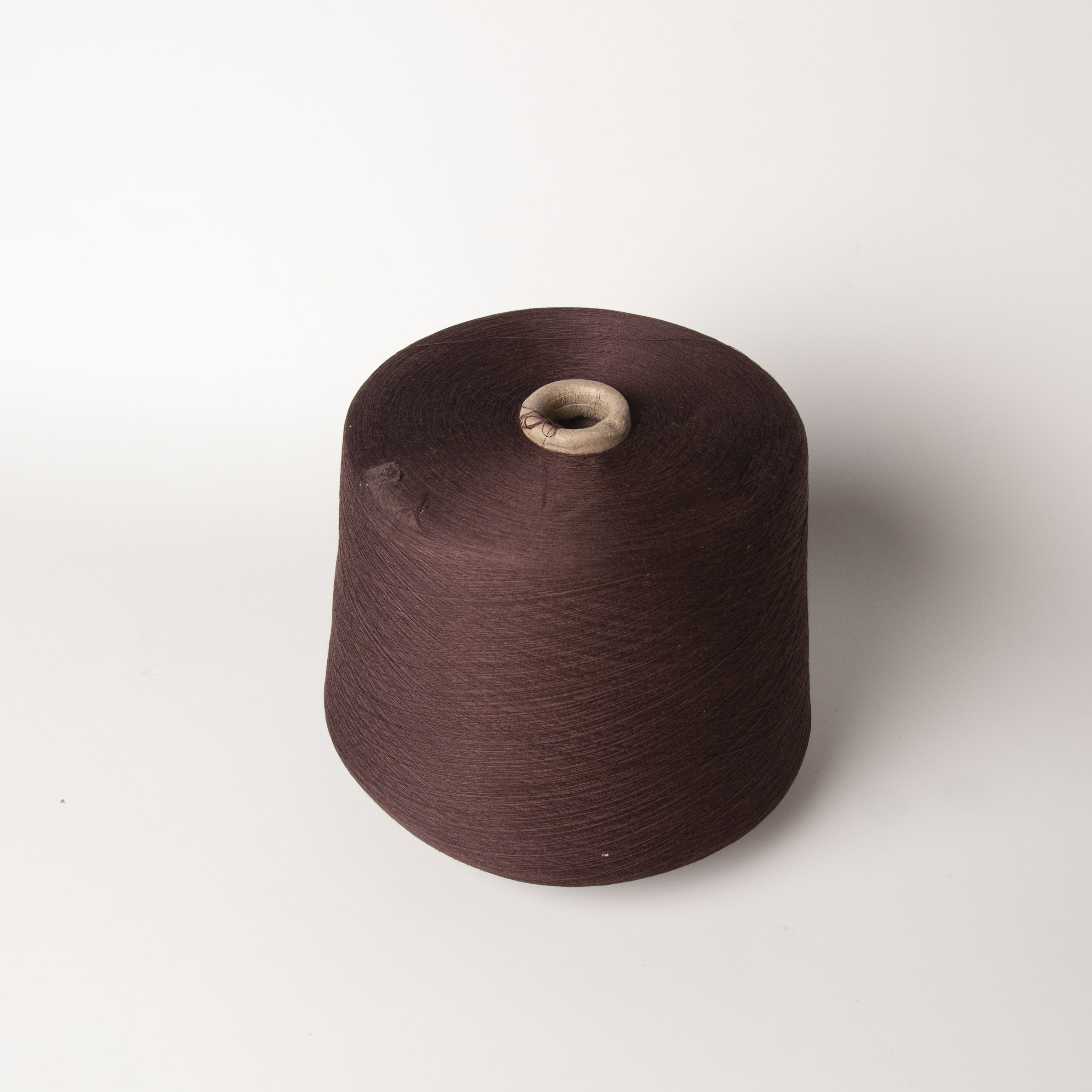
When comparing material options, you must scrutinize physical parameters closely. Evaluating the right spun polyester yarn specifications prevents costly operational failures down the line. Virgin spun polyester offers a highly distinct performance profile. It delivers maximum tensile strength. It maintains predictable thermal stability during high-temperature dyeing processes. Superior abrasion resistance makes it highly dependable for heavy usage. You should use virgin grades for industrial applications. They excel in high-speed automated weaving environments. Premium apparel also requires this consistent strength to maintain shape and durability over time.
Conversely, recycled polyester (rPET) focuses primarily on sustainability. Its performance profile remains environmentally compliant, aligning perfectly with green corporate initiatives. However, it requires rigorous testing before large-scale implementation. You must check for unexpected tenacity drops. Impurity levels can vary significantly between batches. It works best for eco-conscious consumer lines. Here, compliance and marketing value offset slight performance trade-offs. Brands often blend it carefully to maintain structural integrity.
You must demand specific technical data before signing any purchase order. Non-negotiable specs include Twist Per Inch (TPI). Always check the Coefficient of Variation (CV%) to ensure uniformity. Breaking strength data proves the yarn can handle mechanical tension. Requesting these lab reports ensures you receive exactly what you paid for.
Table: Virgin vs. Recycled Polyester Performance Comparison
Parameter | Virgin Spun Polyester | Recycled Polyester (rPET) |
|---|---|---|
Tensile Strength | Exceptionally high and consistent | Moderate to high, requires testing |
Thermal Stability | Highly predictable under heat | Slightly variable depending on batch |
Impurity Levels | Near zero | Potential for micro-impurities |
Best Applications | High-speed weaving, industrial use | Eco-apparel, sustainable consumer lines |
Yarn count defines the structural density of your final product. It relates directly to thickness, fabric drape, and overall weight. Lower counts mean thicker, heavier yarns. Higher counts create finer, lighter fabrics. Choosing the right count prevents structural failure and ensures optimal comfort. The "30s" count represents a critical sweet spot for high-volume manufacturing. Specifying high quality 30s spun polyester yarn guarantees excellent performance for a wide variety of tasks.
Sportswear and activewear heavily rely on this specific count. It balances moisture-wicking capabilities perfectly with mechanical durability. It provides the strength needed for constant stretch and recovery. Apparel and blending applications also benefit greatly from this thickness. The 30s count serves as an ideal core thread. It complements natural fibers well when producing institutional textiles like hotel sheets or hospital gowns.
You must remain aware of implementation risks. "Under-speccing" serves as a common trap for procurement teams. Do not use too fine a count for heavy-duty applications. Saving upfront costs often leads to premature fabric failure. Match the count to the exact stress requirements of the end-user. Always consult your technical team before finalizing the count.
Application-specific matching defines manufacturing success. You must define the technical boundaries of each variation. Doing so prevents costly misapplications on the factory floor. Conventional spun polyester yarn fits general apparel production perfectly. It works exceptionally well for home textiles like curtains and bed linens. Your primary focus here remains on bulk, softness, and everyday comfort.
Core-spun polyester provides a unique dual-advantage for complex garments. It typically features a strong poly-core surrounded by a soft cotton wrap. Applications requiring extreme seam strength need this hybrid approach. You gain immense tensile strength without sacrificing a natural hand-feel. It handles industrial washing effortlessly. This makes it popular for workwear and denim.
Spun polyester sewing thread differs entirely from standard weaving yarn. It requires much higher twist multiples. It demands specialized lubrication and finishing processes. These chemical treatments help the thread survive high-speed sewing needles. Standard weaving threads will snap under these extreme friction conditions. The lubrication reduces needle heat and prevents thread melting.
To avoid misapplications, follow these best practices:
Always use conventional spun grades for knitting lightweight t-shirts and casual wear.
Select core-spun variations for heavy-duty workwear seams that require flexibility.
Specify highly lubricated sewing thread for high-RPM automated stitching machines to prevent snapping.
Test twist multiples in a lab setting before running full-scale garment assembly lines.
You must look beyond the basic spec sheet when evaluating partners. Audit your spun polyester yarn supplier for operational maturity and transparency. Supply chain resilience ensures you never run out of stock during peak seasons. Traceability and certification serve as key shortlisting criteria. Demand ISO 9001 compliance for quality management. Look for the Oeko-Tex Standard 100 label to guarantee chemical safety. Require the Global Recycled Standard (GRS) if you are buying rPET materials.
Enforce strict testing protocols internally and externally. Ask buyers to request independent lab reports from the manufacturer. These documents should cover standard parameters like tensile strength and hairiness. Verify elongation at break and color fastness. Establishing a sample-to-bulk consistency framework is critical. This pilot-testing approach minimizes financial risk and protects your brand reputation.
Follow these exact next steps for procurement teams:
Order multiple trial cones for a preliminary visual and physical check.
Run a pilot loom test to observe thread behavior under normal factory tension.
Measure exact machine downtime and breakage rates during the trial period.
Compare dye absorption of the sample against your existing color standards.
Scale up to bulk orders only after validating OEE improvements on the floor.
The final verdict is clear. The "best" material grade depends entirely on your specific application context. You must align technical specifications with the exact mechanical demands of the end product. There is no universal solution in textile manufacturing. Whether prioritizing extreme strength, eco-compliance, or a specific count, rigorous evaluation prevents costly mistakes. Verifying parameters like TPI, CV%, and breaking strength is mandatory.
Take actionable steps today to improve your production metrics. First, audit your current yarn defect rates directly on the factory floor. Identify whether frequent breakages stem from hairiness or weak tensile strength. Next, contact a technical sales representative for an expert consultation. Finally, match a specific grade and count precisely to your machinery to maximize your output and profitability.
A: The optimal count is typically 30s or 40s. These counts provide an ideal balance of breathability and mechanical durability. Lightweight knits often use 40s to enhance moisture-wicking and comfort. Heavier athletic wear relies on 30s to withstand high-stress movements and stretching without breaking.
A: Polyester offers superior tensile strength and abrasion resistance. It holds its shape well under industrial conditions. Acrylic yarn provides better thermal properties and a softer, wool-like tactile feel. Polyester dominates heavy-duty commercial textiles, while acrylic is preferred for cold-weather garments where warmth and softness are prioritized.
A: The industry-standard moisture regain for spun polyester sits at approximately 0.4%. This low absorption rate gives the material its excellent quick-drying capabilities. It ensures dimensional stability in damp environments. Maintaining this benchmark is crucial for consistent performance in high-humidity applications.
A: Always request Global Recycled Standard (GRS) transaction certificates to verify the material's origin. Ask for independent laboratory reports comparing the recycled batch's tensile strength against virgin baselines. Rigorous testing for tenacity and impurity levels ensures the rPET yarn will not compromise your weaving or knitting efficiency.