T: +86-13758587081
E: longtaiyarn@sina.com
E: longtaiyarn@sina.com
Longtai Textile, Building 58, Yuwang Xincun, Datang Street, Zhuji City, Shaoxing City, Zhejiang Province, China.
Views: 0 Author: Site Editor Publish Time: 2026-09-22 Origin: Site


Transitioning to sustainable textiles is no longer a differentiator. It is a baseline for modern survival. B2B procurement and product development teams face a critical friction point today. Standard off-the-shelf recycled yarns often fail to meet exact brand specifications. You experience tension between the convenience of stock yarn and the demanding needs of bespoke sustainable collections. Stock options might save initial time. However, they heavily restrict your creative and functional goals. Customizing your yarn requires upfront investment in minimum order quantities (MOQs). It also demands longer production lead times. Still, this customization becomes entirely necessary. Standard options frequently compromise fabric performance, color accuracy, or compliance targets. We will explore the technical triggers demanding customized specifications. You will learn how to balance setup requirements against the commercial value of proprietary eco-friendly textiles. We also cover practical steps to identify the right supplier for your exact weaving needs.
Customization is justified when standard counts and blends cannot achieve required tensile strength or fabric drape.
Bespoke color sorting and precise blending (e.g., cotton/polyester ratios) are essential for brands building exclusive sustainable collections without dyeing.
Evaluating a custom run requires balancing higher Minimum Order Quantities (MOQs) against the commercial value and premium pricing of differentiated eco-friendly textiles.
Partnering with an integrated supplier mitigates the inherent risks of batch-to-batch inconsistency in recycled fibers.
Open-market recycled yarn carries inherent limitations. You often encounter inconsistent fiber lengths and limited stock colors. Fluctuating impurities plague cheap open-market options. Standard yarns work best for high-volume, low-margin products. In these fast-fashion scenarios, generic specifications usually suffice. Speed-to-market serves as your primary performance indicator. You might accept slight defects to maintain exceptionally low costs.
However, you need custom recycled yarn when physical fabric integrity truly matters. Strict visual consistency and specific Life Cycle Assessment (LCA) data tie directly to high-value end products. High-end apparel and technical textiles demand absolute precision. A premium canvas tote bag cannot afford random weak spots. Luxury sustainable garments require perfect drape and hand-feel.
Standard yarns boast lower upfront costs. Custom yarns actually reduce downstream manufacturing waste. They minimize loom stops and fabric defects. When weaving parameters align perfectly, overall machine efficiency improves drastically. Loom downtime destroys profitability. Customizing the yarn prevents this costly downtime. You end up producing more first-grade fabric per hour.
Table 1: Standard vs. Custom Recycled Yarn Comparison Matrix
Performance Metric | Standard Recycled Yarn | Custom Recycled Yarn |
|---|---|---|
Speed to Market | Immediate availability | Requires careful setup lead times |
Upfront Investment | Low initial purchasing cost | Higher initial setup requirements |
Manufacturing Waste | Higher risk of loom stops | Minimizes downstream fabric defects |
Brand Exclusivity | Generic, easily replicated | Proprietary blends and colors |
Ideal Application | Low-margin, high-volume fast fashion | High-value, premium performance textiles |
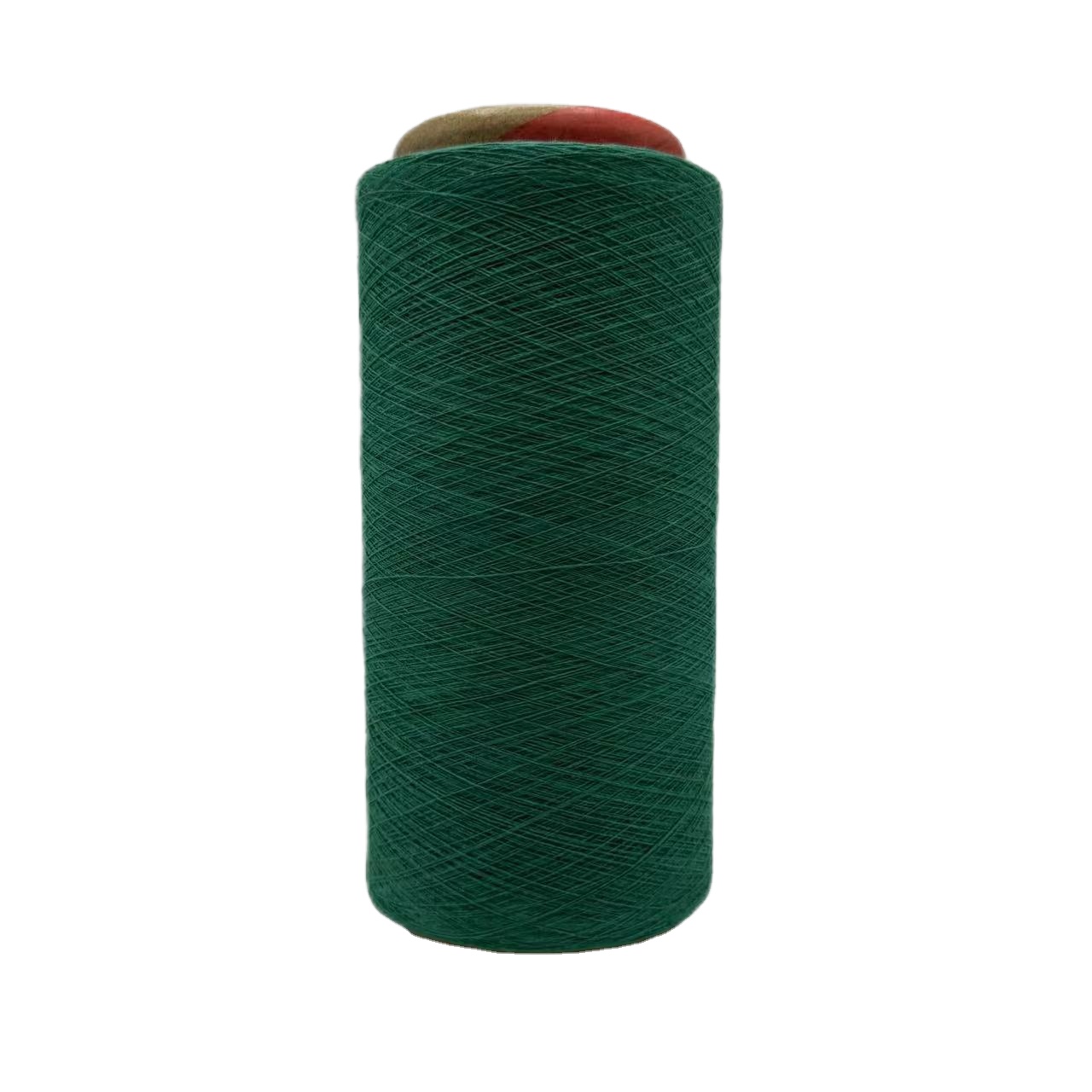
Why move away from stock options? Technical requirements often force the transition. Weaving demands incredible precision. A mismatch in physical properties disrupts entire production lines. You must customize when generic parameters fail your engineering tests.
Specific fabric weights require non-standard yarn counts. Off-the-shelf 10s or 20s yarns might compromise your fabric density. For example, your production line might specifically require oe yarn recycled weaving yarn 12s to achieve optimal density. Open-end 12 count yarn performs exceptionally well in heavy-duty canvas, rugged denim, and durable home textiles. Choosing the exact count ensures your industrial looms run smoothly. You avoid constant tension adjustments. The mechanical action of heavy looms demands specific yarn thicknesses. Anything less leads to fabric bowing or skewed weft insertions.
We must address a stark physical reality. Pure mechanically recycled cotton is often too weak for high-speed industrial weaving. The mechanical shredding process physically breaks cotton fibers. This violent action shortens the staple length. Shorter staples reduce overall tensile strength dramatically.
You can customize the blend ratio to solve this fundamental weakness. Adding recycled polyester (rPET) or virgin acrylic boosts durability. The synthetic fibers act as a structural skeleton.
Determine your target tensile strength for specific rapier or air-jet loom speeds.
Adjust the rPET-to-cotton ratio to meet these exact mechanical stress points.
Test the yarn's abrasion resistance to ensure the final garment meets your brand longevity standards.
Lock in the final customized formula for bulk production.
This precise approach helps you hit physical targets safely. It avoids greenwashing entirely. You deliver a genuinely durable product to your consumers.
Dyeing textiles consumes massive amounts of freshwater. You can bypass this ecological burden entirely. We customize pre-consumer and post-consumer textile waste sorting. This achieves brand-specific Pantone matches. Workers and optical machines sort fabric clips by exact shades. We then blend different colored fiber bales together mechanically.
This mechanical color blending achieves exact shades safely. It eliminates water-intensive dyeing processes. It also removes toxic chemical runoff from your supply chain entirely. Your brand can launch vibrant collections while maintaining strict environmental commitments. Customers love the unique, slightly heathered look. It visually communicates authenticity.
You must evaluate the return on investment carefully. Compare the initial setup costs of custom recycled weaving yarn specifications against final product pricing. Custom runs require higher minimum order quantities. They take longer to spin. However, the final woven garment commands a much higher retail price.
Brand exclusivity drives this commercial value. Proprietary yarn blends allow textile brands to market truly unique collections. Competitors using stock yarns cannot replicate your fabric's specific drape. They cannot copy your custom color profiles. You create a defensive moat around your product line. Your marketing team gains a powerful storytelling asset. Consumers willingly pay a premium for verified, distinct sustainable materials.
Compliance adds further commercial value. Enterprise retail buyers increasingly require transparent supply chain mapping. Custom runs allow for tighter control over Global Recycled Standard (GRS) transaction certificates. You can prove exactly where your fibers originated. This traceability secures lucrative contracts. Major retailers prioritize verified sustainability over cheap, undocumented materials. They demand rigorous proof.
Proprietary blends protect your supply chain from direct copycats.
GRS transaction certificates validate your environmental claims.
Precise LCA data satisfies enterprise-level ESG reporting requirements.
Premium pricing models easily offset the initial MOQ investments.
Let us acknowledge basic material assumptions. Recycled fibers inherently vary. Customization reduces natural fiber variations significantly. It does not eliminate them entirely. You must plan for slight discrepancies in raw material inputs. Cotton clips from different seasons possess different intrinsic qualities.
Batch-to-batch consistency requires serious industrial engineering. Maintaining uniformity across custom commercial runs demands specialized equipment. Larger homogenization silos mix massive quantities of fiber before spinning. This blends out microscopic variations across tons of material. It ensures cone number one matches cone number ten thousand perfectly. Without adequate blending silos, color banding will ruin your woven fabric.
Physical testing remains absolutely mandatory. Before scaling custom runs, you must execute independent testing. Standard academic methodologies evaluate crucial metrics rigorously.
Test tensile strength using ISO standards to prevent catastrophic loom breakage.
Evaluate pilling resistance via Martindale machines for maximum garment longevity.
Check colorfastness under intense UV light and commercial washing cycles.
Skipping these physical tests guarantees production delays. Verify every single parameter before committing to bulk manufacturing.
Selecting the right partner involves looking beyond the simple price per kilogram. You need a reliable technical collaborator. A cheap supplier costs much more when their weak yarn breaks constantly on your loom. Production downtime erases any initial savings.
Look for true vertical integration. Prefer a recycled weaving yarn supplier controlling the entire process. They should manage waste collection, color sorting, shredding, and spinning in-house. This unbroken chain of custody ensures ultimate customization fidelity. It prevents disastrous miscommunication between separate shredding and spinning facilities. Vertically integrated factories adapt much faster to your specific engineering tweaks.
Assess suppliers based on prototyping flexibility. Will they provide small pilot runs? Can you get sample cones before committing to large-scale MOQs? A trustworthy supplier understands your daily reality. You need to test the yarn on your own industrial looms first. They accommodate this vital step.
Your next-step action is quite clear. Audit the supplier's GRS certifications immediately. Request technical data sheets for similar customized blends they produced recently. This documentation proves their capability to execute your precise requirements flawlessly.
Customizing your recycled weaving yarn is not for every single project. However, it is the definitive path for brands seeking high-performance textiles. It merges supreme durability with verifiable sustainability perfectly.
Take these actionable next steps today:
Evaluate your current loom efficiency and fabric rejection rates thoroughly.
Calculate if custom specifications could lower overall production costs by drastically reducing downstream waste.
Determine the exact cotton-to-polyester fiber blend needed to hit your specific tensile strength targets.
Request a small pilot run to validate your bespoke mechanical color match on industrial looms.
Investing in precise yarn specifications elevates your final product. It shifts your textiles from generic commodities to highly profitable, premium sustainable assets.
A: Setup thresholds vary depending on the spinning method and color complexity. Typically, MOQs range from two to five tons for custom blends. This volume ensures the homogenization silos can properly mix the recycled fibers. Processing smaller amounts compromises batch-to-batch consistency throughout the entire production run.
A: We use mechanical color blending rather than traditional chemical dyeing. While we cannot guarantee a chemically identical Pantone match, we achieve extremely close visual proximity. This mechanical process creates a beautiful, subtle heathered effect. Consumers heavily associate this unique look with premium sustainable textiles.
A: Yes. When properly customized, Open End recycled yarn performs exceptionally well. We engineer specific twist multipliers and optimize the exact cotton-to-polyester blend ratios. This technical customization provides the necessary tensile strength. It successfully prevents frustrating yarn breakage on high-speed industrial rapier looms.