
T: +86-13758587081
E: longtaiyarn@sina.com
E: longtaiyarn@sina.com
Longtai Textile, Building 58, Yuwang Xincun, Datang Street, Zhuji City, Shaoxing City, Zhejiang Province, China.
Views: 0 Author: Site Editor Publish Time: 2026-09-06 Origin: Site


Have you ever faced a sudden production halt due to yarn snapping? Selecting the incorrect thickness or specification of stretch yarn often leads to severe production downtime. It causes inconsistent fabric tension, frustrating dye defects, and much higher defect rates on the knitting floor. These issues directly hurt your bottom line. We designed this guide to provide production managers and purchasing teams with an evidence-based framework. You can easily evaluate yarn weight, core-to-sheath ratios, and supplier capabilities before committing to bulk orders. Read on to discover how to match technical requirements to specific textile outcomes. You will learn to optimize machine performance while guaranteeing premium fabric quality.
Spandex covered yarn sizing relies on a dual-metric system: the Denier (D) of the spandex core and the Denier of the outer wrapping fiber (e.g., polyester or nylon).
Project requirements—ranging from sheer hosiery to heavy-duty medical compression—dictate the exact core-to-cover ratio required.
Selecting between standard mechanical wrapping and customized high elastic air covered spandex fundamentally impacts knitting speed, fabric hand-feel, and project cost.
Vetting a supplier requires looking beyond price per kilogram to evaluate lot-to-lot consistency, shrinkage rates, and sampling protocols.
Understanding yarn metrics is the first step to a flawless production run. Industry professionals rely on specific measurements to ensure the final fabric behaves predictably. We will break down these technical labels so you can make informed purchasing decisions. You must master the dual-denier framework to decode essential spandex covered yarn specifications.
Manufacturers label stretch yarns using a simple but critical two-part formula. You will typically see labels reading something like "20D/75D". This format tells you exactly what components make up the filament.
Core Metric: The first number represents the elasticity baseline. In our example, "20D" indicates a 20-denier spandex filament. It provides the core stretch and recovery force.
Covering Metric: The second number indicates the outer wrapping layer. A "75D" label often refers to 75-denier polyester or nylon. This layer provides durability, determines the texture, and absorbs the dye.
The draft ratio measures how much tension the machines apply to the core during the wrapping process. It directly dictates the final stretch modulus of your textile. High draft ratios create a rigid, high-compression fabric. Low draft ratios yield a softer, more forgiving stretch. You must calibrate this ratio precisely to avoid fabric distortion. If the tension is too high, the yarn might snap during the knitting phase. We always recommend confirming the draft ratio on the technical data sheet.
You can wrap the elastic core in two primary ways. Each method affects both the structural integrity and the final cost of the project.
Single Covered Yarn (SCY): A single outer filament wraps around the core in one direction. This creates a lightweight, highly elastic yarn. It costs less but often carries high torque. This torque can cause lightweight knitted fabrics to curl at the edges.
Double Covered Yarn (DCY): Two outer filaments wrap around the core in opposite directions. The second layer balances the twist of the first layer. This creates a stable, torque-free yarn. It costs more and feels slightly thicker. However, it is essential for high-end garments and medical textiles.
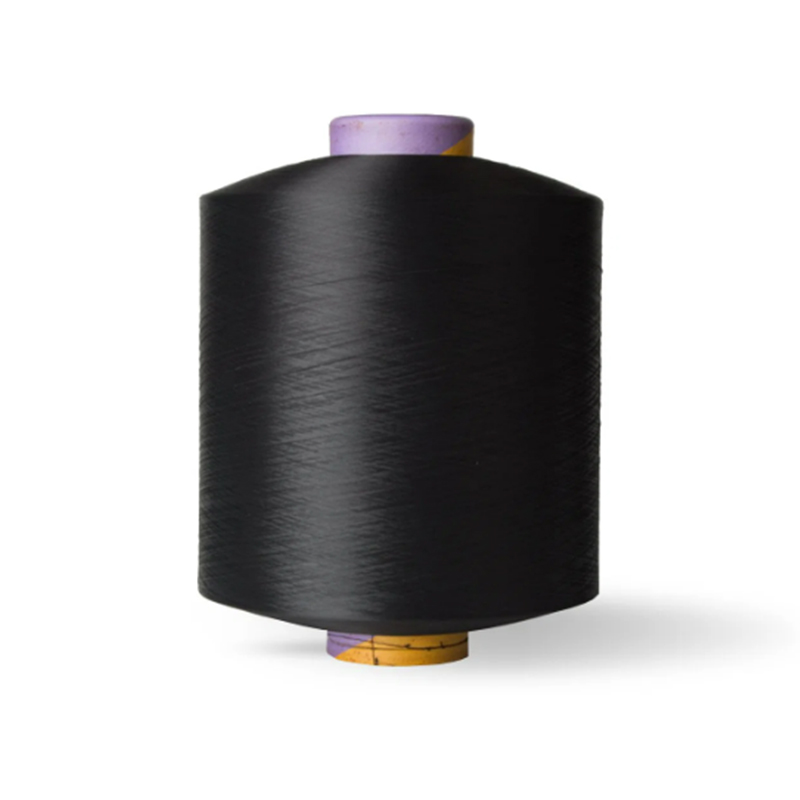
Different textile projects demand specific yarn weights. Using a heavy yarn for delicate hosiery ruins the transparency. Using a fine yarn for medical bandages eliminates the required compression. You must match the denier precisely to your end product. The categories below outline the ideal ranges for standard applications.
Fine-gauge machines require ultra-thin materials to function correctly. You will typically use a 15D to 30D core for these delicate applications. They are best for sheer hosiery, seamless garments, and lightweight innerwear.
Your success criteria for this category include high fabric transparency and an ultra-soft hand feel. The garments should offer very low compression. They must feel like a second skin without restricting movement.
The activewear industry relies heavily on mid-weight combinations. A 30D to 70D core provides robust performance for everyday wear. These dimensions are best for yoga pants, swimwear, and stretch denim.
Success criteria here focus on balancing opacity with shape retention. Consumers expect these garments to stretch dynamically during exercise. More importantly, they expect the fabric to recover its original shape immediately. Mid-weight filaments deliver this dynamic stretch recovery effectively.
Industrial and medical applications require maximum force and extreme durability. You will use a 70D to 140D (or higher) core for these robust projects. They are best for medical bandages, orthopedic supports, and heavy woven textiles.
The success criteria are strict. You need maximum structural durability and high compression forces. The finished textile must also resist degradation from repeated high-heat washing and industrial sterilization processes.
Spandex Thickness Application Summary Chart
Application Category | Core Denier Range | Ideal Textile Projects | Key Success Criteria |
|---|---|---|---|
Lightweight & Sheer | 15D - 30D | Hosiery, seamless garments, innerwear | High transparency, soft feel, low compression |
Mid-Weight Performance | 30D - 70D | Activewear, swimwear, stretch denim | Opacity, shape retention, dynamic stretch |
Heavy-Duty & Compression | 70D - 140D+ | Medical bandages, orthopedic supports | Maximum durability, high wash resistance |
Traditional mechanical covering is not the only option available today. Textile engineers frequently turn to modern air intermingling techniques to boost efficiency. Understanding when to upgrade your specifications can save significant time and money on the factory floor. You should consider whether customized high elastic air covered spandex fits your upcoming production run.
We must contrast traditional mechanical covering with air covered yarn (ACY). In mechanical covering, machines physically wrap a solid filament around the core. This creates a tight, uniform spiral. ACY uses a completely different principle. Machines feed the core and the outer fibers through a specialized nozzle. Compressed air jets blast the fibers, causing them to intermingle and tangle at regular intervals. This creates a cohesive yarn without a physical twist.
Production Speed: ACY integrates much smoother into high-speed knitting machines. It lacks the physical twist of mechanical yarns, meaning it causes fewer snags and reduces needle wear.
Fabric Characteristics: Intermingled fibers yield a much softer, matte finish. This contrasts sharply with the tight, sometimes shiny uniform wrap of a mechanical covering.
Cost Efficiency: ACY is often more economical for large-scale activewear runs. It produces faster than double-covered mechanical alternatives. However, it does require precise tension calibration during the knitting process.
Manufacturers can adjust specific parameters during the ACY process to build proprietary fabrics. Altering the air pressure changes the frequency of the fiber tangles. Adjusting the feed rates of the core and sheath modifies the final elasticity. These levers allow brands to fine-tune the stretch-to-recovery ratio. You can create a bespoke feel unique to your apparel line.
Guessing your yarn dimensions usually ends in disaster. A mismatch between the filament and the machine gauge ruins fabric batches. It also damages expensive knitting equipment. When sourcing standard spandex covered yarn, you must anticipate these implementation risks to protect your margins.
Knitting machines operate with extreme precision. If you use a denier too thick for the machine's specific gauge, friction builds up instantly. The thick yarn struggles to pass through the fine needles. This friction leads to rapid mechanical failures, bent needles, and severe machine jamming. Replacing broken needles stops production entirely and increases maintenance costs.
Fabric aesthetics matter just as much as physical performance. If the outer yarn is too thin relative to the inner core, you face a defect called "grinning." When the fabric stretches, the raw, undyed spandex core becomes visible through the sheath. This ruins the dye uniformity and makes the garment look cheap. You must ensure the covering denier is thick enough to hide the core completely under maximum stretch.
Heat-setting is a mandatory finishing step for stretch textiles. Mismatched core-and-cover weights react unpredictably during this high-heat process. The polyester sheath might shrink at a different rate than the thick core. This imbalance warps the yardage, causing puckering and uneven fabric surfaces. You cannot salvage fabric damaged by inconsistent shrinkage.
Your finished garment is only as reliable as your raw materials. Partnering with the right manufacturer eliminates headaches downstream. You need a partner who prioritizes transparency and rigorous quality control. Here is a definitive framework to evaluate a spandex covered yarn supplier before you sign a bulk contract.
Inconsistent elasticity ruins mass production. You cannot adjust machine tension for every single yarn cone. The importance of testing continuous tension and elongation variance across multiple batches cannot be overstated. A reliable manufacturer will guarantee minimal variance between lot A and lot B. Request batch testing records before making a commitment.
Never buy industrial yarn blindly. A trustworthy partner should readily provide transparent technical data sheets (TDS). These documents must detail exact elasticity percentages, applied draft ratios, and colorfastness ratings. If a facility hesitates to share their laboratory testing results, you should look elsewhere.
Scaling a new product line requires flexibility. You should assess whether the facility allows for small-batch sampling before demanding full-container orders. Can they produce a few sample cones for your R&D team? Furthermore, verify their lead times. Custom specifications often take weeks longer to produce than standard off-the-shelf sizes. Ensure their timeline aligns with your product launch schedule.
Global apparel brands face strict environmental regulations. Ensure the facility complies with recognized ecological and safety standards. Certifications like OEKO-TEX Standard 100 verify that the materials contain no harmful substances. Traceable, certified supply chains protect your brand reputation and ensure consumer safety.
Yarn thickness is never a one-size-fits-all variable. It requires perfectly aligning the machine gauge, the end-product use case, and your specific elasticity needs.
Ignoring the core-to-sheath ratio risks severe mechanical failures and aesthetic defects like grinning.
You must secure technical data sheets and verify lot-to-lot consistency to maintain quality across bulk orders.
Start your procurement process smartly. Request sample cones of 2-3 adjacent specifications to run localized knitting or weaving tests.
Do not leave your next production run to chance. Take proactive steps today to secure the correct materials. Contact your supplier's engineering or sales team with your specific machine gauges and product requirements. They will provide tailored technical spec recommendations to guarantee your project's success.
A: Both measure linear mass density, indicating yarn thickness. Denier measures the weight in grams of 9,000 meters of yarn. Dtex (Decitex) measures the weight in grams of 10,000 meters. You can easily convert them using the formula: 1 Denier = 1.11 Dtex. The US market heavily favors Denier, while European and Asian standards generally prefer Dtex.
A: You should utilize standard laboratory procedures. A tensile testing machine clamps the yarn and pulls it to measure elongation at break. To test recovery, the machine stretches the yarn to a specified percentage, holds it, and releases it. It then calculates the elastic recovery rate based on how close it returns to its original length.
A: While extreme thickness plays a minor role, edge curling is usually related to high yarn twist (torque). Single covered yarns twist heavily in one direction, causing lightweight fabrics to roll up. Switching to double covered yarns, or alternating 'S' and 'Z' twist directions during knitting, usually solves this problem.
A: Generally, no. Warp knitting applies intense machine tension and requires smoother, higher-tenacity yarns. You typically need fine air-covered or highly uniform mechanical wraps for warp knitting to prevent breakage. Weft knitting operates with lower tension and offers slightly more flexibility when selecting core and cover sizes.