T: +86-13758587081
E: longtaiyarn@sina.com
E: longtaiyarn@sina.com
Longtai Textile, Building 58, Yuwang Xincun, Datang Street, Zhuji City, Shaoxing City, Zhejiang Province, China.
Views: 0 Author: Site Editor Publish Time: 2026-01-13 Origin: Site


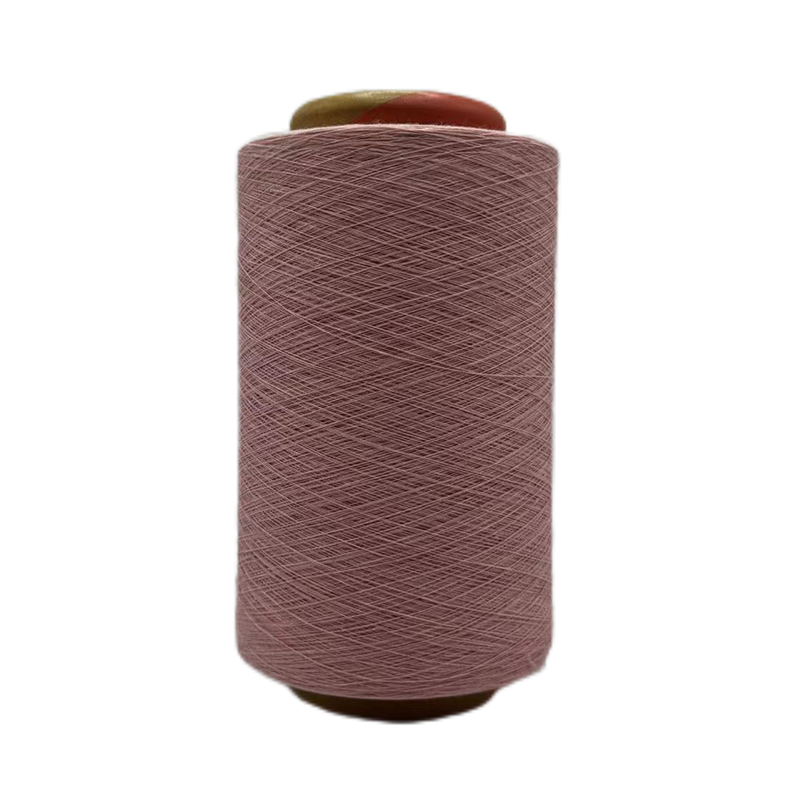
The textile industry is rapidly shifting towards sustainability. A key part of this movement is the choice between recycled and virgin polyester yarn. As eco-conscious brands and consumers demand greener alternatives, the debate over which type of polyester to use has gained importance.
In this article, we will explore the key differences between recycled polyester (rPET) and virgin polyester, focusing on their production, performance, and environmental impact. Leading brands like Longtai are driving the adoption of sustainable yarn solutions, making it essential for businesses to understand these differences in order to meet sustainability goals.
Virgin polyester yarn is produced from petrochemical raw materials, primarily derived from crude oil. The process begins with the extraction of petroleum, which is then refined and polymerized to create polyester. This polyester is spun into fibers and yarn, which are then woven or knitted into fabric.
The production process for virgin polyester is energy-intensive, relying on fossil fuels. Additionally, it requires significant water and chemical resources, making it a resource-heavy material. While virgin polyester has established itself as a reliable material due to its durability, smooth texture, and versatility, it has a significant environmental footprint.
Recycled polyester yarn (rPET) is made from post-consumer plastic bottles or textile waste, a process that involves collecting discarded plastic, cleaning it, and breaking it down into flakes. These flakes are then melted, purified, and repolymerized into new polyester fibers.
The recycling process can be done through mechanical recycling (which involves physically breaking down and re-spinning fibers) or chemical recycling (which breaks down the plastic into monomers and rebuilds them into polyester). Longtai, for example, provides both virgin and recycled yarn solutions, catering to the growing demand for environmentally friendly alternatives across various industries.
| Type | Raw Material | Process | Environmental Impact |
| Virgin Polyester | Crude Oil (Petroleum) | Refining, Polymerizing, Spinning | High energy, water, and chemical use |
| Recycled Polyester (rPET) | Post-consumer Plastic Waste | Cleaning, Melting, Repolymerizing | Reduces waste, energy, and water use |
Virgin polyester relies entirely on petroleum-based raw materials. The extraction of crude oil, followed by its refinement into polyester, contributes to the depletion of non-renewable resources. Furthermore, the production of virgin polyester generates substantial carbon emissions, as well as a high consumption of energy and water.
In contrast, recycled polyester uses waste plastic—mainly bottles and textile scraps—that would otherwise end up in landfills or oceans. This approach reduces the need for new raw materials and conserves valuable resources. Recycled polyester production is far less resource-intensive, requiring significantly less energy and water.
Longtai has been championing the use of rPET, offering yarn made from recycled materials that support the circular economy by diverting plastic waste from landfills and contributing to resource conservation.
The environmental impact of polyester production is starkly different between virgin and recycled types. The table below summarizes the key environmental differences between virgin polyester and rPET.
| Environmental Factor | Virgin Polyester | Recycled Polyester (rPET) |
| Carbon Emissions | High due to petrochemical use | 45-60% lower than virgin polyester |
| Energy Consumption | High energy use during production | 75% less energy required |
| Water Consumption | Large water usage during processing | Up to 90% less water used |
| Waste Generation | Creates new waste in production | Reduces landfill waste |
This comparison highlights the clear environmental benefits of using recycled polyester. By choosing rPET, companies can significantly reduce their carbon footprint and conserve energy and water.
Both virgin and recycled polyester yarns offer strong durability and strength, making them ideal for a variety of applications, including fashion, home textiles, and activewear. However, early concerns about recycled polyester's performance—such as weaker strength and reduced longevity—have largely been addressed with advances in recycling technology. Today, rPET yarn can be just as durable and robust as virgin polyester.
Longtai’s recycled yarn offerings are manufactured to meet the same high-performance standards as virgin polyester, ensuring long-lasting products for their customers.
Recycled polyester yarn tends to have a slightly different texture than virgin polyester due to the reprocessing of plastic. While virgin polyester typically provides a smooth, consistent texture, rPET may show slight surface variations. However, this difference is often imperceptible to the average consumer.
In fact, modern manufacturing techniques have minimized these tactile differences, and high-quality rPET yarns now match virgin polyester in feel and comfort.
Recycled polyester yarn has found applications across various industries, including fashion, home textiles, and sportswear. It is used in everything from T-shirts and dresses to activewear and upholstery. In many cases, rPET’s performance is on par with virgin polyester, making it suitable for most applications where polyester is traditionally used.
Longtai provides a wide range of recycled polyester yarns that are used in the production of activewear, home textiles, and fashion apparel, offering businesses sustainable yet durable fabric options.
| Factor | Virgin Polyester | Recycled Polyester (rPET) |
| Durability & Strength | High | Comparable to virgin polyester |
| Texture & Feel | Smooth, Consistent | Slight surface variations |
| Wearability & Applications | Fashion, Home Textiles, Activewear | Fashion, Home Textiles, Activewear |
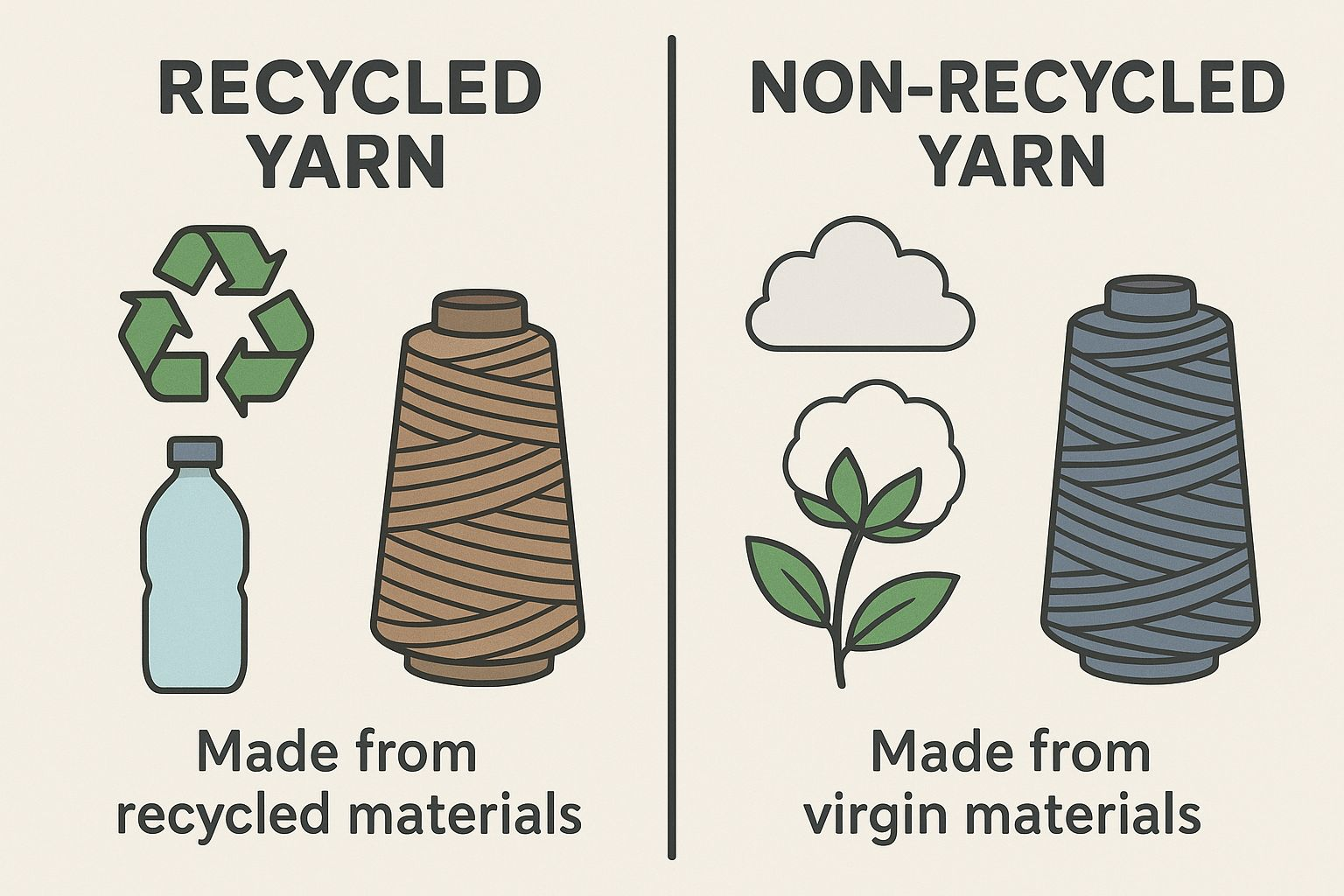
One of the main advantages of recycled polyester is its role in reducing plastic waste. By recycling post-consumer plastic bottles or textile waste, rPET helps divert these materials from landfills and oceans, giving them a second life as useful products. Additionally, producing recycled polyester uses significantly less energy—up to 75% less compared to virgin polyester production.
Recycled polyester also offers a much lower carbon footprint. Studies show that rPET can reduce carbon emissions by 45–60%, making it a valuable material in efforts to combat climate change. This reduction is a direct result of bypassing the petroleum extraction and refinement processes that are required for virgin polyester.
Recycled polyester supports the principles of the circular economy by ensuring that materials are reused rather than discarded. This helps reduce the reliance on fossil fuels, cuts down on waste, and conserves natural resources. As a leader in sustainable yarn solutions, Longtai’s commitment to producing recycled polyester aligns with global efforts to make fashion and textiles more sustainable.
Historically, recycled polyester was more expensive than virgin polyester due to the additional steps involved in the recycling process. However, as technology has advanced and demand for sustainable materials has increased, the cost difference has decreased.
In the case of Longtai, while recycled polyester yarn may have a slightly higher upfront cost, it offers long-term value due to its sustainability benefits and growing market demand.
Though the initial cost of recycled polyester can be higher, its long-term cost-effectiveness is undeniable. As global consumer awareness about environmental sustainability increases, brands that prioritize eco-friendly products—such as those made from rPET—can expect to see increased demand, allowing for better market positioning and brand value.
| Factor | Virgin Polyester | Recycled Polyester (rPET) |
| Upfront Cost | Lower | Slightly higher |
| Long-Term Value | Lower sustainability impact | Long-term eco-friendly benefits |
| Market Demand | Stable | Increasing as eco-awareness grows |
Recycled polyester often carries eco-certifications like the Global Recycled Standard (GRS) and OEKO-TEX®, which validate its environmental credentials. These certifications ensure that the recycled materials used in the production of yarn meet high standards for sustainability, chemical safety, and social responsibility.
In contrast, virgin polyester has limited sustainability credentials, as it relies on petroleum-based raw materials and contributes to higher levels of carbon emissions and resource depletion. This makes recycled polyester the more environmentally responsible choice for businesses aiming to reduce their carbon footprint.
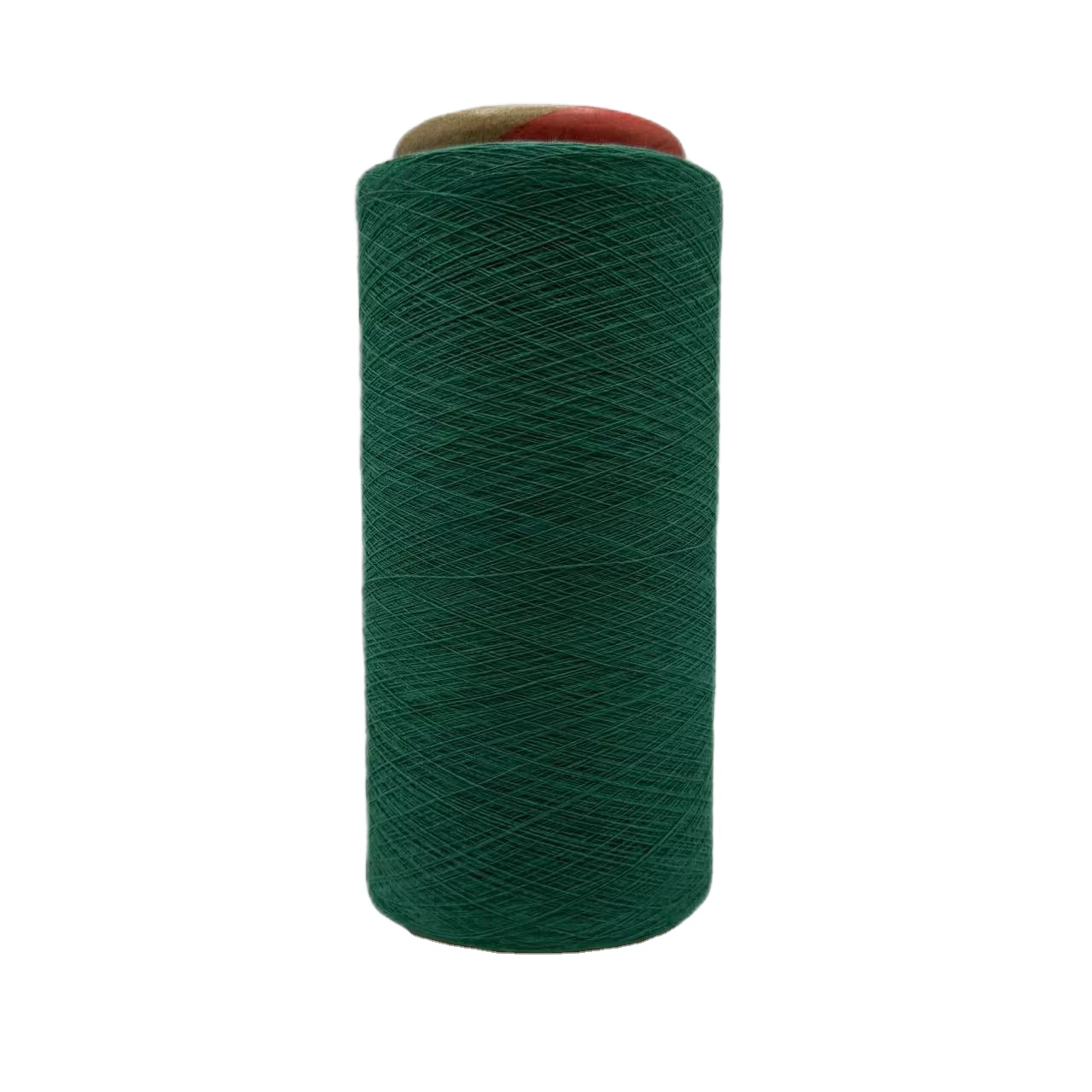
Recycled polyester yarn is commonly used in activewear, where its moisture-wicking and quick-dry properties make it ideal for performance garments. In addition, the use of rPET helps reduce the environmental impact of activewear production, aligning with the growing trend of sustainable fashion.
Recycled polyester is also used in fashion and casualwear, including T-shirts, dresses, and outerwear. Its versatility and sustainability make it an appealing choice for brands that want to offer stylish yet eco-friendly clothing options to consumers.
Recycled polyester’s applications extend to home textiles, such as curtains, bedding, and upholstery. As more consumers demand sustainable home products, rPET is becoming a popular choice for businesses that want to offer eco-friendly textiles.
Longtai plays a significant role in providing recycled yarn for home furnishings, ensuring that sustainability is integrated into every stage of the production process.
| Application | Common Use | Sustainability Benefit |
| Activewear & Sportswear | Moisture-wicking, quick-dry garments | Reduced environmental impact |
| Fashion & Casualwear | T-shirts, dresses, outerwear | Stylish, eco-friendly clothing |
| Home Textiles & Upholstery | Curtains, bedding, upholstery | Eco-friendly home products |
The differences between recycled and virgin polyester yarn are clear, especially regarding environmental impact. Recycled polyester significantly reduces waste, energy use, and carbon emissions. With rising consumer demand for sustainable products, businesses adopting recycled polyester can stay ahead. For companies like Zhuji Longtai Import & Export Co., Ltd., offering eco-friendly, high-performance yarn options, investing in recycled polyester boosts both environmental and brand value. Businesses aligning with sustainability goals should explore recycled polyester as a viable alternative to traditional virgin yarn.
A: Recycled polyester yarn is made from post-consumer plastic waste or textile scraps, reducing the need for new raw materials. In contrast, virgin polyester yarn is produced from petrochemical raw materials, requiring more energy and resources in its manufacturing process.
A: Recycled yarn significantly lowers carbon emissions, energy consumption, and water usage compared to virgin polyester. By repurposing plastic waste, it helps reduce landfill waste and supports a more sustainable, circular economy.
A: Yes, modern recycled polyester yarn performs similarly to virgin polyester in terms of durability, strength, and comfort. Advances in recycling technologies have made rPET nearly identical to virgin yarn in terms of quality and performance.
A: Choosing recycled polyester yarn helps businesses align with sustainability goals, reduce their carbon footprint, and cater to eco-conscious consumers. It can also enhance brand value and market competitiveness in an increasingly green marketplace.
A: Recycled polyester yarn can initially be more expensive due to the extra processes involved in recycling. However, as technology advances and demand grows, the cost gap is narrowing, and recycled yarn offers long-term value through sustainability benefits.
A: Zhuji Longtai Import & Export Co., Ltd. offers high-performance recycled polyester yarn, providing businesses with eco-friendly options that support sustainability while maintaining product quality. Their commitment to sustainable yarn solutions helps meet the growing demand for environmentally responsible textile materials.