T: +86-13758587081
E: longtaiyarn@sina.com
E: longtaiyarn@sina.com
Longtai Textile, Building 58, Yuwang Xincun, Datang Street, Zhuji City, Shaoxing City, Zhejiang Province, China.
Views: 0 Author: Site Editor Publish Time: 2026-09-07 Origin: Site


In textile manufacturing, selecting the correct twist direction for Nylon 6 DTY yarn is not just a technical detail. It directly dictates fabric stability, stretch recovery, and overall yield. Many operators underestimate how twist impacts the final garment. Incorrect twist application leads to severe fabric skewing, widely known as spirality. It also causes uneven dye uptake and frustrating loom downtime.
When producing high-stretch apparel, you must evaluate both mechanical properties and supplier consistency. You need reliable raw materials to maintain efficient production speeds. This guide breaks down the operational differences between S and Z twist configurations. We explore specific use cases like seamless activewear and delicate lace construction. Finally, we outline essential procurement criteria for standard deniers. You will learn how to balance torque and optimize your manufacturing floor for maximum output.
Torque Management: Combining S twist yarn and Z twist yarn is the industry standard for neutralizing torque and preventing fabric spirality in circular knitting.
Application Specificity: Z twist is generally favored for standard seamless knitting yarn, while lace knitting yarn often requires precise alternating S/Z setups for intricate pattern stability.
Spec Evaluation: The 50D/24F nylon DTY specification offers an optimal balance of filament fineness and durability for intimate apparel.
Risk Mitigation: Reliable sourcing requires evaluating a supplier’s false-twist texturing consistency, elongation variation, and dye-lot uniformity.
Drawn Textured Yarn (DTY) begins its life as a continuous filament. Manufacturers process this raw filament through a specialized false-twist texturing method. This critical step adds bulk, desirable stretch, and a softer hand feel. It transforms smooth, plastic-like fibers into a material resembling natural cotton. The texturing process ensures the synthetic material feels comfortable against human skin. It also improves moisture-wicking capabilities for performance garments.
During texturing, the yarn runs rapidly through a series of friction discs. The machine mechanically twists the filament, heats it to set the molecular structure, and then untwists it. The direction of this initial mechanical twist permanently alters the structural memory of the fibers. A leftward rotation creates an S twist. A rightward rotation creates a Z twist. The intense heat locks this directional memory into the fiber core forever.
Understanding residual torque is essential for fabric engineers. Residual torque behaves predictably in knitted structures. A single twist direction naturally wants to untwist itself back to a neutral state. This inherent kinetic energy causes knit fabrics to bias or skew diagonally. Manufacturers must carefully balance this torque during production. By managing the opposing forces, you achieve strict dimensional stability. If you ignore residual torque, your finished garments will twist out of shape after the first wash.
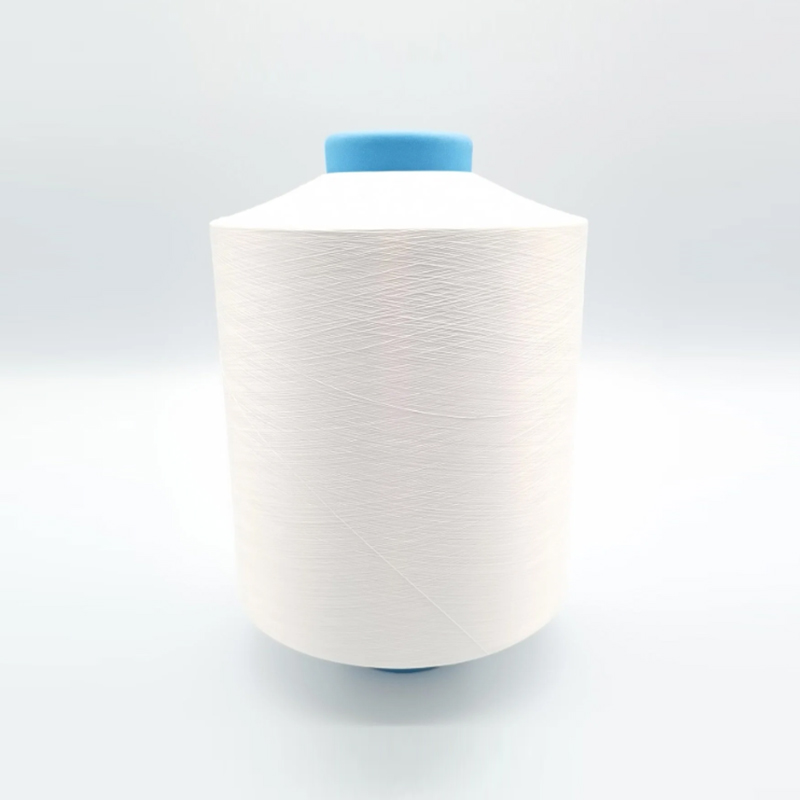
Visually and mechanically, these two variants mirror each other perfectly. A cone of S twist yarn spirals upward to the left. It visually resembles the center diagonal curve of the letter 'S'. Conversely, Z twist yarn spirals upward to the right. It perfectly matches the diagonal stroke of the letter 'Z'. Recognizing this visual difference helps floor operators thread knitting machines correctly.
Twist direction interacts heavily with the mechanical action of your knitting loom. The physical rotation of the knitting cylinder can either compound or reduce yarn tension. If you feed only one twist direction into a single-jersey machine, residual energy dominates. It forces the fabric loops to lean sharply to one side. This leaning effect creates visible diagonal lines across the fabric surface. It ruins the drape and fit of the final apparel.
Facilities employ a "plied" feeding strategy to combat this spirality. They thread alternating S and Z cones into the circular loom feeders. For example, feeder one receives an S twist, while feeder two receives a Z twist. This alternating technique effectively cancels out residual torque. The opposing mechanical forces neutralize each other entirely within the knit structure. The final fabric lays completely flat on the cutting table without any diagonal skewing.
Using mismatched tension settings for alternating S and Z cones.
Failing to track dye-lot variations between different twist batches.
Ignoring ambient factory humidity, which heavily affects yarn torque behavior.
Threading feeders out of sequence during a shift change.
Seamless garments demand high stretch recovery and skin-friendly softness. A zero-defect tubular construction is absolutely critical for production success. Production facilities often rely on Z twist as the primary feeder for basic, low-stretch knits. However, high-end seamless knitting yarn setups utilize alternating S and Z feeds. This maintains strict dimensional stability under multi-directional stretch. Premium activewear requires this advanced stability to support complex body-mapping zones. For added structural support, manufacturers often interknit these bases with 30d-70d Spandex Nylon SCY to enhance overall garment elasticity.
Lace manufacturing requires exceptional tenacity to withstand complex warp-knitting machinery. It also demands precise loop formation to create sheer, intricate patterns. High-quality lace knitting yarn relies on specific twist combinations to manage extreme loom tension. Choosing the correct sequence prevents the delicate lace mesh from curling at the edges. Proper twist selection ensures the lace lays flat during the delicate finishing processes. Raschel and jacquard machines depend on exact torque balance to prevent needle breakage.
Textile Application | Primary Twist Setup | Primary Performance Benefit |
|---|---|---|
Basic Tubular Knits | Z Twist (Single Feed) | Maximizes machine threading speed and efficiency |
Premium Seamless Activewear | Alternating S and Z Feeds | Eliminates spirality, ensures 4-way stretch stability |
Intricate Warp-Knit Lace | Application-Specific Sequence | Prevents fabric edge curling and loop distortion |
High-Compression Base Layers | Alternating S and Z Feeds | Delivers uniform compression without diagonal shifting |
The 50D/24F nylon DTY configuration provides an ideal micro-filament ratio. The "50D" denotes a 50 Denier weight, indicating a very lightweight structure. The "24F" signifies 24 individual filaments within that yarn bundle. This specific dimension dominates lingerie and activewear base layers. It suits lightweight, highly breathable fabrics perfectly. It offers enough substance to prevent sheer transparency while remaining practically weightless.
Evaluating performance outcomes reveals why this specification remains an industry standard. The 24 filaments offer excellent tactile softness without compromising essential tensile strength. High-speed circular looms require this durability to prevent costly yarn breakage. Furthermore, nylon 6 inherently delivers deep, rapid dye uptake compared to other synthetics. Uniform twist directly impacts color fastness during the dyeing phase. It prevents visual banding and ensures consistent, vibrant shades across long production runs.
Compared to ultra-fine 20D or heavier 70D deniers, 50D/24F delivers a superior cost-to-yield ratio. You achieve high surface coverage without adding excessive material weight to the garment. Thicker deniers create heavy, stiff garments unsuitable for intimate apparel. Conversely, ultra-fine deniers drastically increase loom breakage risks and slow down production. The 50D/24F specification hits the precise sweet spot for both quality and manufacturing efficiency.
Batch-to-batch consistency determines your ultimate manufacturing success. The primary risk in sourcing synthetic fibers involves twist variation between individual cones. This hidden inconsistency causes horizontal lines in finished fabrics. The industry calls this the "barré" effect. Barré ruins entire production batches and leads to massive material waste. You must secure suppliers who guarantee uniform texturing temperatures across all production lines.
Never purchase bulk material without reviewing the technical data sheets first. Demand detailed specifications before initiating any order. Review crimp contraction rates to ensure the stretch matches your garment requirements. Check elongation percentages to verify the yarn will survive high-tension knitting. Verify the intermingling nodes per meter. These nodes are categorized as NIM (Non-Intermingled), SIM (Slightly Intermingled), or HIM (Highly Intermingled). The node count directly affects how the yarn bundles hold together on the loom.
Verify factory environmental standards carefully. Look closely for Oeko-Tex Standard 100 certification. This guarantees the material remains free from harmful chemical residues. Skin-contact apparel demands this level of safety. If sustainability is a primary brand mandate, verify GRS (Global Recycled Standard) credentials. Certified materials protect your brand reputation and ensure global market compliance.
We recommend initiating procurement with a small-batch sampling process. Order a few sample cartons to run a pilot test on your specific machines. Validate tension behavior and dye uniformity directly in your own facility. Exploring our comprehensive catalog of products helps you find the exact match for your machinery. Reliable sourcing ultimately protects your production timeline and profit margins.
Choosing between S and Z twist is a strictly operational decision. It is driven entirely by your specific machinery setup and fabric stability requirements. Utilizing alternating twist directions often yields the best results for comprehensive torque management. Strategic sourcing goes far beyond simply buying raw materials. The right supplier provides technical data sheets proving torque consistency and dye-lot uniformity.
You need partners who understand the delicate physics of false-twist texturing. Request sample cones of S and Z twist today. Run a tension and dye test directly on your factory floor to validate performance. By matching the right denier and twist combination to your looms, you will drastically reduce downtime. You will also elevate the final quality of your seamless and lace garments.
A: Yes, you can use it for basic tubular knits. However, combining S and Z feeds is highly recommended for premium garments. This alternating method completely eliminates residual fabric torque and prevents skewed seams.
A: It indicates 50 Denier, which measures the yarn's weight and thickness. The 24F stands for 24 Filaments, representing the number of individual microscopic fibers bundled together. It is an industry-standard specification for lightweight, soft apparel.
A: The twist direction itself does not change the color. However, inconsistent twist levels within a batch will cause uneven dye penetration. This inconsistency results in visible fabric defects and horizontal banding.
A: It intentionally counters the mechanical rotation of specific warp-knitting machines. This precise opposition ensures the yarn feeds smoothly. It prevents the delicate filaments from tangling or snapping under high loom tension.