
T: +86-13758587081
E: longtaiyarn@sina.com
E: longtaiyarn@sina.com
Longtai Textile, Building 58, Yuwang Xincun, Datang Street, Zhuji City, Shaoxing City, Zhejiang Province, China.
Views: 0 Author: Site Editor Publish Time: 2026-09-23 Origin: Site


Seamless circular knitting operates at extremely high speeds. Advanced machines demand absolute zero-tolerance for tension inconsistencies. Even a single snapped filament can halt production. It can easily ruin an entire garment batch. You must maintain strict control over your raw materials.
Buyers often view polyester DTY yarn as a simple commodity. They assume all suppliers offer the same baseline quality. However, batch-to-batch variation directly impacts machine downtime. Minor quality dips quickly inflate fabric defect rates. This inconsistency produces unwanted Grade B garments and damages brand reputation.
This guide provides a clear procurement and technical evaluation framework. You will learn how to shortlist high-quality yarn partners effectively. We will explore critical specifications, risk mitigation protocols, and strict supplier quality control measures. Following these steps ensures smoother production runs and superior final products.
Seamless knitting requires strict control over crimp contraction, elongation, and intermingling to prevent tension irregularities.
The industry standard 150D/48F polyester DTY yarn provides the baseline balance of coverage and durability, but exact specifications must match machine gauge.
A phased sampling approach (cone test -> trial tube -> bulk run) is mandatory to mitigate rollout risks.
Yarn quality dictates the rhythm of your factory floor. Inferior materials create immediate business problems. When tension fluctuates, machines register errors and trigger automatic stops. Frequent restarts waste valuable production hours. Furthermore, inconsistent materials cause severe needle damage. Replacing damaged needles incurs direct costs and stalls output entirely.
Poor yarn also produces visible flaws in the final garment. Uneven loops create horizontal stripes, known as barré effects. These stripes ruin the visual appeal of activewear and intimates. Consumers spot these defects instantly. Brands cannot sell barré-afflicted garments at full price, leading to massive margin erosion.
You must balance performance with aesthetics. The material must withstand the intense physical stress of knitting. Circular machines pull and twist threads mercilessly. Simultaneously, the material must deliver a specific hand-feel. Intimates require supreme softness against the skin. Activewear demands robust stretch and rapid recovery. Meeting both expectations requires flawless raw materials.
We define a successful sourcing outcome through strict metrics. You should aim for a greater than 98% AA-grade yarn yield. Anything less introduces unacceptable defect rates. Furthermore, you need zero variance in dye uptake across massive dye lots. Color consistency guarantees that separate garment panels match perfectly after assembly. Consistency is the ultimate marker of sourcing success.
Matching technical specifications to your machine gauge prevents operational disasters. You cannot rely on guesswork. Every parameter influences the final fabric structure.
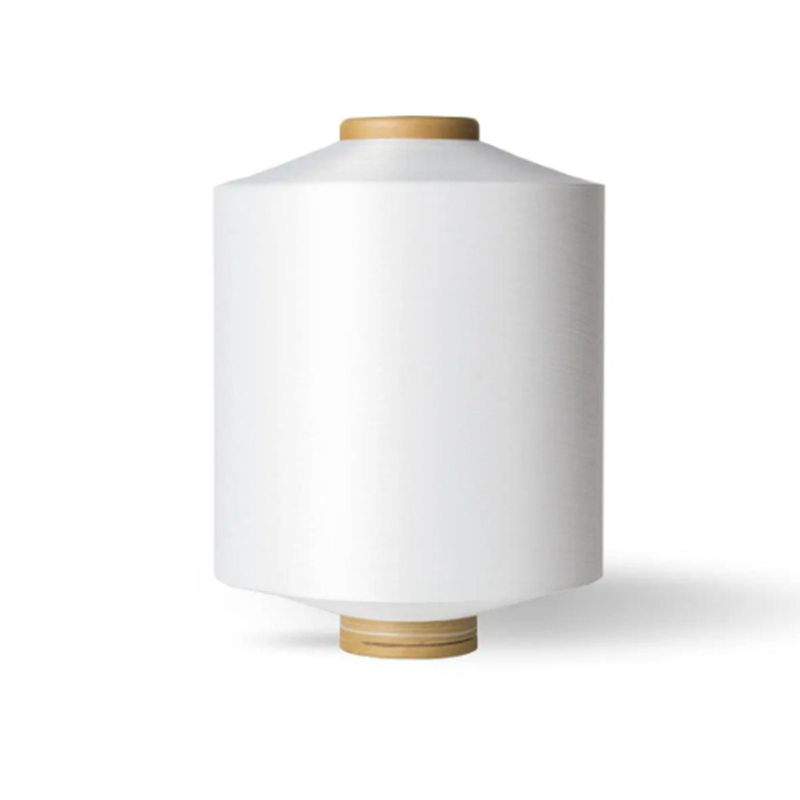
The denier indicates the thickness of the thread. The filament count reveals how many individual fibers make up that thread. The industry standard 150D/48F polyester DTY yarn acts as a versatile workhorse for seamless applications. It provides excellent coverage and withstands knitting tension beautifully. The 48 filaments strike a perfect balance between durability and comfort.
Some applications require even softer textures. You might consider micro-filament options for premium intimates. Specifications like 150D/96F or 150D/144F offer superior softness. The higher filament count creates a luxurious hand-feel. However, micro-filaments snap more easily. They require highly tuned knitting machines and perfectly adjusted tension feeders.
Intermingling uses air pressure to tangle filaments together. This process creates nodes along the thread. These nodes prevent individual fibers from separating during high-speed processing.
Slight Intermingled (SIM): Features a moderate number of nodes. It offers good cohesion for most seamless applications.
High Intermingled (HIM): Features densely packed nodes. It aggressively prevents filament fraying at maximum machine speeds.
Non-Intermingled (NIM): Lacks binding nodes. Filaments balloon outward during unwinding. This causes disastrous snags in seamless machines.
Seamless knitting typically requires SIM or HIM configurations. NIM variants belong in different textile processes where tension is much lower.
Tenacity measures breaking strength. It dictates how much pulling force the thread can endure before snapping. You generally need a baseline tenacity of 3.5 to 4.0 cN/dtex. Anything lower risks constant breakage in the needle beds.
Elongation measures how far the thread stretches before it breaks. Optimal elongation for seamless applications sits between 20% and 30%. This range absorbs sudden tension spikes without permanent deformation.
Crimp contraction measures the spring-like texture of the texturized thread. This metric directly impacts the stretchiness of your final fabric. It also dictates bulkiness and thermal recovery. High crimp contraction yields a fluffy, highly elastic garment. Low crimp results in a flatter, more rigid fabric. You must specify exact crimp targets to maintain consistent garment sizing.
Parameter | Recommended Target | Primary Impact |
|---|---|---|
Tenacity | 3.5 - 4.0 cN/dtex | Prevents thread snapping during high RPM runs. |
Elongation | 20% - 30% | Absorbs sudden tension spikes. |
Intermingling | SIM or HIM (90-120 nodes/m) | Prevents filament separation and fuzzing. |
Oil Content | 1.5% - 2.5% | Reduces friction and static electricity. |
Technical specifications only matter if the factory can reproduce them consistently. Evaluating a polyester DTY yarn supplier requires deep audits of their internal processes. You must verify their claims through objective evidence.
Investigate how the supplier obtains their raw materials. Vertically integrated suppliers produce their own POY (Partially Oriented Yarn). They extrude the polymer chips themselves. This internal control guarantees consistent chemical properties. They use the same polymer recipe for every batch.
Conversely, some suppliers buy POY on the open market. They mix spools from different chemical plants. This practice drastically increases consistency risks. Different POY sources absorb dye differently. This leads to massive color variations during final garment dyeing. Always favor vertically integrated partners.
Demand transparency regarding grading definitions. Many factories loosely use the term "AA Grade". You must ask how they actually measure it. Top-tier suppliers use electronic yarn clearing systems. Sensors monitor the thread for thick places, thin places, and broken filaments.
They also utilize automated tension checks during winding. Ask for Uster statistics from their laboratory. Uster testing provides an objective measurement of thread evenness. A reliable partner will share these reports willingly.
Certain certifications represent absolute non-negotiables. Seamless garments frequently sit directly against the skin. Therefore, OEKO-TEX Standard 100 Class II certification is mandatory. This certification proves the material contains no harmful chemicals. It guarantees safety for prolonged skin contact.
Furthermore, sustainability demands are rising. If you source recycled variants, demand the Global Recycled Standard (GRS) certification. GRS ensures the recycled content is genuine. It also verifies ethical environmental and social practices at the factory level. Never accept self-declared sustainability claims without GRS paperwork.
Switching suppliers carries immense operational risk. You cannot simply order a full container based on a technical document. Rigorous testing prevents catastrophic production failures.
Many buyers fall into the specification trap. A supplier's Technical Data Sheet (TDS) looks perfect on paper. However, a TDS represents ideal laboratory conditions. It rarely matches bulk production perfectly. The actual delivery might have different spin finish oil levels or subtle node variations. You must validate the TDS against physical reality.
Implement a strict, multi-step testing protocol. Never skip a stage, regardless of production urgency.
Lab and Cone Test: Request a small array of sample cones. Send them to an independent lab or your internal testing facility. Check the spin finish oil content. Verify the actual denier against the stated value. Run Uster evenness tests to confirm uniformity. Check the unwinding tension manually.
Knitting Trial: Load the sample cones onto your circular knitting machines. Run a small batch at normal production speeds. Monitor the machine closely. Track the exact breakage rates. Watch for excessive white powder (shedding) under the feeders. Shedding indicates poor intermingling or insufficient oil.
Dyeing Trial: Take the knitted trial tube and send it to your dye house. Apply your most sensitive colors, like light grey or olive green. Check for uniform dye uptake. Look closely for horizontal barré stripes. Test the final colorfastness against washing and friction.
Excellent material easily degrades during shipping. Assess the supplier's packaging standards meticulously. Cones must feature robust, thick cardboard tubes. The outer carton packaging must withstand rough handling during ocean transit.
Crushed cartons deform the cones inside. A deformed cone unwinds unevenly. This creates massive tension spikes during knitting. Additionally, demand uniform cone weights. Consistent weights help operators minimize waste and plan changeovers efficiently.
Sourcing the right materials requires a careful balance. You must match strict technical specifications with rigorous supplier quality assurance. Do not treat texturized thread as a simple, interchangeable commodity. The nuances of intermingling, elongation, and POY consistency dictate your factory's efficiency.
Implement the phased testing protocol strictly. Protect your needle beds and safeguard your fabric quality. By partnering with vertically integrated, certified manufacturers, you eliminate costly defects and downtime.
Your next step is clear. Contact your shortlisted suppliers immediately. Request their latest Technical Data Sheet (TDS) and their OEKO-TEX certificates. Ask them to send a sample cone array so you can initiate the knitting trial protocol today.
A: SIM (Slight Intermingled) and HIM (High Intermingled) refer to the density of tangling nodes. SIM typically has fewer nodes per meter, making it suitable for standard speeds. HIM features tightly packed nodes, preventing filament separation on extremely high-speed circular machines. HIM prevents snags better but can feel slightly stiffer.
A: Yes, it serves as the essential backbone for activewear. However, it rarely provides enough stretch on its own. For high-stretch garments, manufacturers usually core-spin or plate it alongside spandex or elastane. The texturized thread provides durability and coverage, while the elastane delivers the aggressive stretch.
A: You must request historical dye lot variance reports from their internal lab. Additionally, ask for multiple lab dips from different POY extrusion batches. Ensure the supplier is vertically integrated, as in-house POY production is the only way to guarantee stable chemical properties for uniform dyeing.
A: For standard raw white material, MOQs can be as low as 1,000 kg. However, for custom dope-dyed or special color batches, industry standard MOQs typically range from 3,000 kg to 5,000 kg per color. This ensures the factory can run a continuous extrusion and texturizing cycle efficiently.