T: +86-13758587081
E: longtaiyarn@sina.com
E: longtaiyarn@sina.com
Longtai Textile, Building 58, Yuwang Xincun, Datang Street, Zhuji City, Shaoxing City, Zhejiang Province, China.
Views: 0 Author: Site Editor Publish Time: 2026-09-15 Origin: Site


Replacing virgin fibers introduces real concerns about durability, next-to-skin softness, and overall structural integrity. This represents the core tension in sustainable textile production today. Whether you manufacture a high-friction product like a pair of socks or a drape-focused accessory like a scarf, selecting the right material requires critical analysis. You must look past vague "eco-friendly" marketing labels. Instead, you need to carefully analyze fiber staple lengths, twist dynamics, and precise composition ratios. This guide provides a technical evaluation framework for sourcing sustainable materials effectively. It ensures your final products meet specific end-use performance criteria. More importantly, it achieves this goal without compromising your brand credibility or reducing the product lifespan. By understanding how mechanical recycling alters fiber architecture, you can make informed decisions. We will explore how to balance performance metrics against sustainability goals, equipping you to choose the perfect yarn for your next project.
Socks require high abrasion resistance and shape retention; prioritize recycled polyester (rPET) blends or tightly spun, high-twist recycled natural fibers to prevent premature wear.
Scarves demand drape, loft, and next-to-skin softness; focus on recycled wool or cotton blends with lower twist levels to maximize comfort.
Not all recycled yarns are spun equally—mechanical recycling shortens fiber staple lengths, making structural blending (e.g., adding rPET to recycled cotton) essential for commercial viability.
Always verify supplier claims through recognized compliance frameworks like the Global Recycled Standard (GRS) and OEKO-TEX before scaling production.
Mechanical shredding significantly alters the physical properties of raw textiles. When facilities process pre-consumer or post-consumer waste, they chop and tear the original fabrics. This aggressive mechanical process inherently shortens the raw fiber staple length. Short staples create immediate manufacturing challenges. They reduce overall tensile strength and dramatically increase the risk of surface pilling.
Spinning mills counter these structural deficits through strategic engineering. They adjust twist levels, often measured as Twists Per Inch (TPI). Higher twist levels help lock shorter fibers securely into place. Additionally, mills introduce carrier fibers during the spinning process. These stronger, longer carrier fibers bind the short recycled fibers together, creating a stable cohesive strand.
You face a constant trade-off between performance and absolute material purity. Demanding a 100% recycled natural fiber is rarely viable for high-wear consumer items. A pure recycled cotton or wool strand simply lacks the strength to survive daily use. Strategic blending remains an absolute necessity. By mixing short recycled staples with stronger reinforcement fibers, you achieve a highly durable sustainable knitting yarn. The goal is to maximize recycled content while guaranteeing a usable, long-lasting final product.
Ignoring staple length specifications on vendor tech sheets.
Assuming high purity equals high quality.
Failing to account for the physical stress the final garment will endure.
Overlooking the role of twist dynamics in preventing garment pilling.
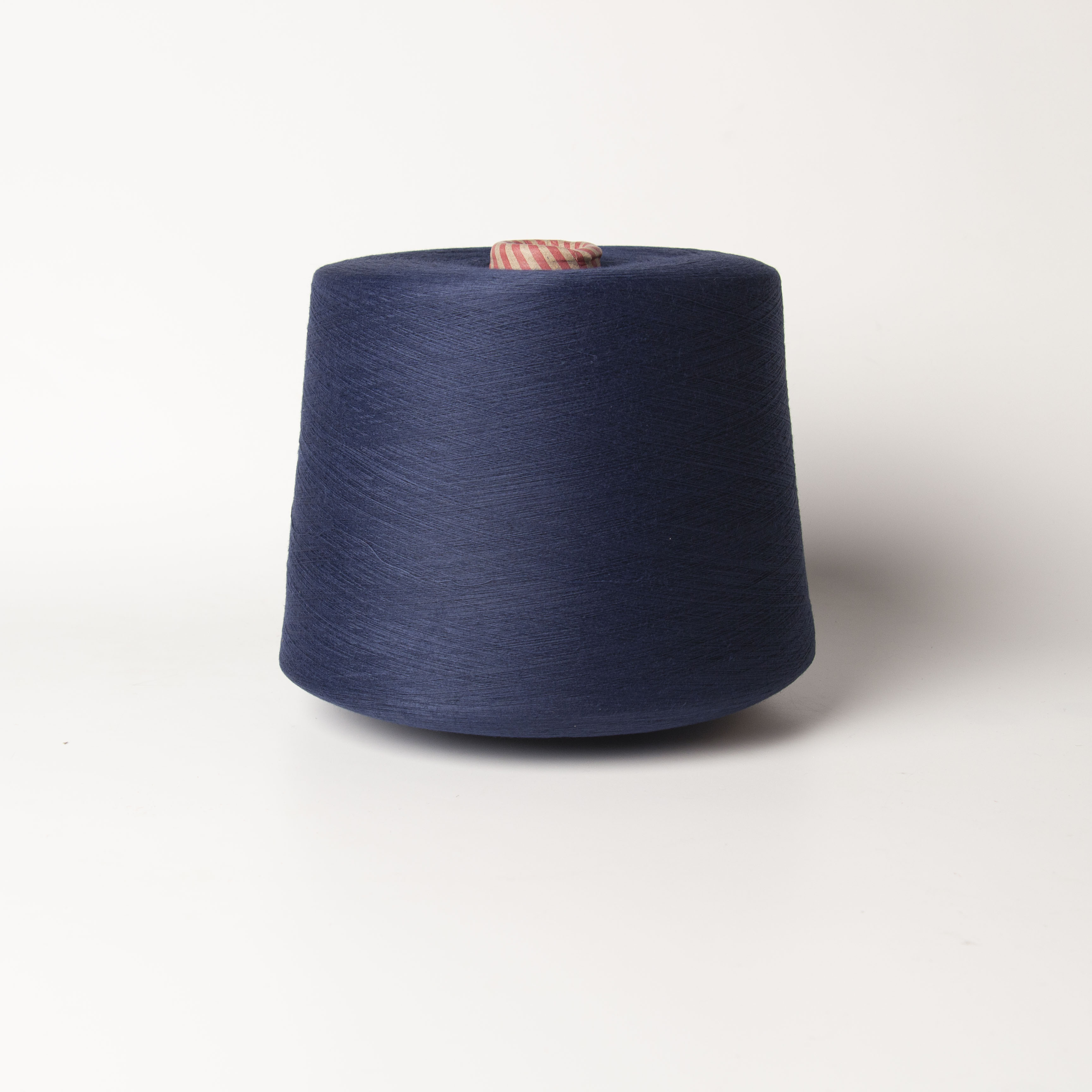
Socks endure intense daily stress. They must withstand heavy abrasion, specifically dealing with constant heel and toe friction. Furthermore, socks need to manage moisture effectively and retain their baseline elasticity after repeated washing cycles. Selecting an appropriate recycled yarn for socks requires a strict focus on these success criteria.
Historically, manufacturers relied on virgin nylon to reinforce sock yarns. Traditional blends usually feature 20% to 25% nylon to guarantee longevity. Today, recycled polyester yarn serves as the primary sustainable alternative for this structural reinforcement. It provides the crucial tensile strength lacking in short-staple natural fibers. By acting as the supportive skeleton of the yarn, it prevents the sock from wearing thin after a few uses.
For optimal results, look for a high-twist multi-ply structure. We recommend an ideal composition target combining 70% to 80% recycled natural fiber (like wool or cotton) and 20% to 30% synthetic reinforcement. This precise ratio balances comfort against structural integrity. You get the soft feel of natural fibers reinforced by the resilience of synthetics.
However, implementation risks exist. Using too much synthetic fiber severely reduces breathability. Poor moisture-wicking leads directly to user discomfort and localized heat buildup. Conversely, specifying an overly twisted yarn can make the final garment feel uncomfortably rigid. You must find the precise middle ground.
Performance Metric | Recommended Specification | Expected Benefit |
|---|---|---|
Composition Ratio | 70-80% Natural / 20-30% Synthetic | Balances next-to-skin comfort against critical abrasion resistance. |
Twist Level (TPI) | High-twist | Locks short staple fibers tightly to prevent heel and toe pilling. |
Ply Structure | Multi-ply (2-ply or 3-ply) | Distributes friction stress evenly across multiple bonded strands. |
Scarves operate in a completely different physical environment compared to socks. They exist in a low-friction setting. However, they require exceptionally high next-to-skin softness. Eliminating the "prickle factor" is mandatory. Scarves also demand excellent thermal regulation and an attractive, fluid drape. You must evaluate recycled yarn for scarves based strictly on these specific tactile requirements.
Your recommended fiber profiles should prioritize luxurious comfort. Recycled cashmere, recycled merino wool, and recycled cotton blends perform exceptionally well. Unlike socks, scarves benefit heavily from low-twist, single-ply, or loosely spun yarns. A lower twist allows the individual fibers to expand slightly. This expansion maximizes air trapping, which directly improves thermal warmth while delivering a vastly softer hand-feel.
Avoiding the dreaded "cardboard" feel requires vigilance. We strongly warn against using stiff synthetic blends for scarf production. High percentages of plastic-based fibers create rigid, unnatural draping. If you need synthetic reinforcement to maintain production stability, strictly keep those recycled synthetics below 15%. This limitation ensures you maintain a premium, natural hand-feel while keeping the material easy to process on knitting machines.
Request loosely spun singles or low-twist plied yarns from your supplier.
Focus on post-consumer recycled wool or high-grade cotton.
Perform physical neck-sensitivity tests before approving any production batch.
Avoid highly chemically processed carrier fibers which can cause skin irritation.
Protecting your brand from greenwashing accusations is paramount. When sourcing a reliable recycled spun yarn, you must validate trustworthiness through established compliance frameworks. Relying solely on verbal supplier promises exposes you to severe reputational risk.
You should align your sourcing strategy with essential industry standards. These frameworks provide verifiable proof of material origin and chemical safety:
GRS (Global Recycled Standard): This comprehensive standard verifies the exact percentage of recycled content. It also meticulously tracks the chain of custody from the initial waste collector through to the final spinner.
RCS (Recycled Claim Standard): This serves as a secondary option if GRS certification is unavailable. It tracks material presence but is generally less stringent regarding environmental and social processing criteria.
OEKO-TEX Standard 100: This certification is absolutely crucial for next-to-skin items like scarves and socks. It guarantees the final material remains completely free from harmful residual processing chemicals.
We must acknowledge a transparent assumption: certified materials carry a moderate premium. Securing these trusted certifications requires extensive auditing and documentation by the supplier. However, paying this premium completely offsets the risk of downstream product failure. It also shields your brand during rigorous compliance audits.
Understanding batch consistency realities will save you significant frustration. Recycled yarns naturally exhibit higher color and texture variations between dye lots compared to virgin synthetics. Because the base materials come from sorted textile waste, minor hue shifts are unavoidable. You should inform your buyers and design teams about these natural material characteristics early in the development phase.
Implementing a strict sampling protocol mitigates large-scale manufacturing errors. Before committing to commercial volumes, order one or two sample cones. Knit standard swatches using your exact production machinery. Wash and block these swatches to test for unexpected gauge shifting. For sock candidates, perform a rigorous rub test comparable to a Martindale abrasion test. For scarf candidates, rely on physical neck-sensitivity testing across multiple users.
Your vendor vetting logic must be thorough. Ask suppliers directly for detailed specification sheets. Demand clarity regarding fiber staple lengths, exact composition ratios, and the specific origin of the recycled waste. You need to know whether the rPET yarn originates from post-consumer plastic bottles or pre-industrial factory waste. Transparent suppliers will provide this data without hesitation.
Testing Category | Sock Yarn Priority | Scarf Yarn Priority |
|---|---|---|
Abrasion Resistance | Critical (Focus on heel/toe rub tests) | Low Priority |
Tactile Softness | Moderate (Foot comfort) | Critical (Neck prickle test) |
Drape and Loft | Low Priority | Critical (Evaluate post-blocking) |
Elastic Recovery | Critical (Shape retention after washing) | Low Priority |
Choosing the right recycled material is fundamentally an exercise in matching fiber architecture to end-use realities. Socks demand the robust strength of synthetic blends combined with highly twisted structures to survive daily friction. Scarves, conversely, thrive entirely on the loft, drape, and gentle softness provided by lower-twist natural blends.
Your next step requires active validation. Contact your shortlisted suppliers immediately to request comprehensive technical specification sheets. Order sample cones for your primary colorways. Begin prototype swatching and conduct rigorous wash-testing to ensure the material behaves predictably under real-world conditions.
A: Yes, provided it is OEKO-TEX certified to ensure no harmful chemicals remain from the recycling process. It is highly recommended to blend it with natural fibers for breathability.
A: Mechanical recycling processes physically break and shorten the fibers. Shorter staples are more prone to working their way out of the twist and forming pills, which is why appropriate blending and higher twist ratios are critical for high-wear items.
A: It is generally not recommended. A yarn durable enough for socks (tight twist, higher synthetic content) will often feel too harsh and stiff for a comfortable scarf, whereas a soft scarf yarn will degrade rapidly if walked on.