
T: +86-13758587081
E: longtaiyarn@sina.com
E: longtaiyarn@sina.com
Longtai Textile, Building 58, Yuwang Xincun, Datang Street, Zhuji City, Shaoxing City, Zhejiang Province, China.
Views: 0 Author: Site Editor Publish Time: 2026-08-30 Origin: Site


Seamless knitting operates at blistering speeds. You have almost zero margin for error on the production floor. Using the wrong yarn profile quickly leads to costly machine downtime. It causes severe needle breakage and frustrating fabric defects. The barré effect serves as a prime example of this failure. Standard drawn textured yarn might work fine for conventional flat weaving. However, circular seamless machines demand absolute consistency. They rely entirely on perfect tension, exact crimp levels, and uniform intermingling. These crucial elements form smooth fabric tubes. Selecting the right polyester DTY yarn requires looking closely past basic specification sheets. You must evaluate physical uniformity, intermingling nodes, and dye affinity properly. Manufacturers must tune these physical factors specifically for complex seamless applications. This comprehensive guide helps you understand the technical dimensions. We explore how to evaluate bobbins effectively. You will learn to match specific profiles to end-use applications accurately.
Yarn uniformity directly controls seamless machine efficiency; variations in tension cause immediate fabric defects.
Intermingling levels (NIM, SIM, HIM) must match your specific knitting speed and fabric density requirements.
Standardizing on configurations like 150D/48F DTY yarn provides a reliable baseline, but filament micro-structure dictates the final hand-feel and elasticity.
Supplier evaluation must mandate consistent dyeing guarantees and physical testing reports (e.g., Uster statistics) before bulk procurement.
The cost of inconsistency hits production floors incredibly hard. Slight variations in bulkiness cause immediate headaches. Elongation differences lead to uneven loops. Dropped stitches frequently plague Santoni or similar circular knitting machines. High defect rates destroy daily production schedules rapidly. When tension fluctuates, the machine cannot adjust fast enough. This physical limitation ruins the internal fabric structure. Knitted loops become irregular and visually unappealing.
Circular knitting machines possess hundreds of microscopic needles. They rotate continuously at extremely high speeds. When tension spikes occur suddenly, these tiny needles bear the brunt of the physical stress. A single broken filament can jam a delicate needle instantly. Replacing broken needles stops the entire circular machine. Operators must halt operations frequently to fix these mechanical issues. They must manually re-thread the broken filaments. This tedious process wastes valuable time.
Mixing yarn lots causes serious problems later in production. Choosing poorly textured polyester yarn results in ugly horizontal striping post-dyeing. Industry professionals call this the barré effect. The dye uptake differs drastically across varying filament structures. This microscopic inconsistency ruins entire production batches. You cannot fix barré once the fabric leaves the dye house. The chemical damage remains permanent. You must discard the entire batch entirely.
Balancing raw material performance against operational profitability requires careful thought. You must weigh initial savings against hidden factory expenses. Frequent machine stops eat into daily production quotas rapidly. Frequent breakage frustrates machine operators. It slows down the entire factory floor. B-grade finished garments destroy brand reputation. Using specialized material ensures continuous, uninterrupted machine operation. It protects your overall manufacturing efficiency.
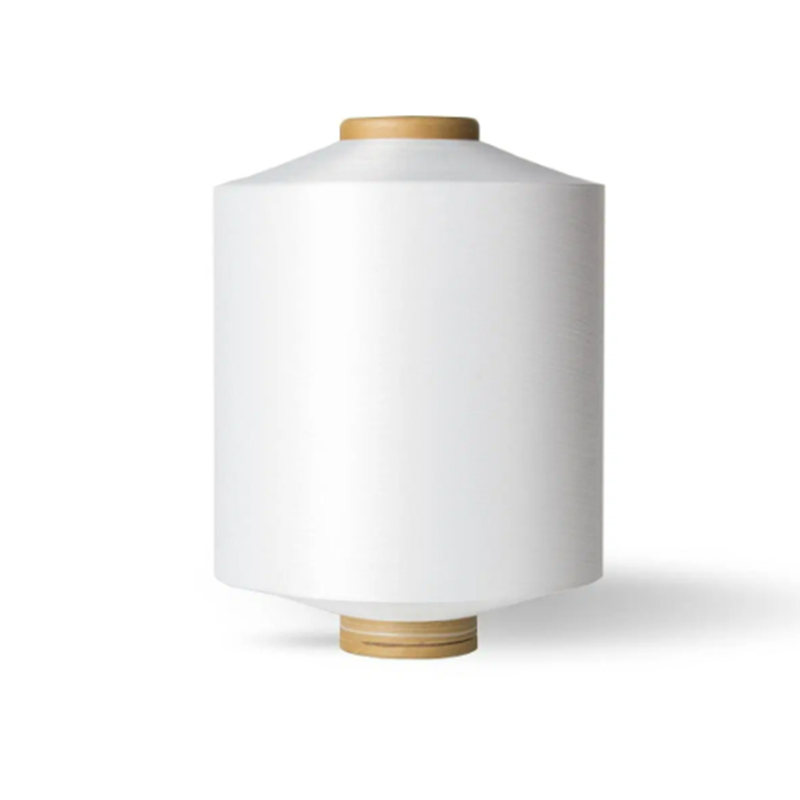
Evaluating weight and thickness remains a primary step. Denier measures the mass accurately. The filament count determines the resulting softness. We see 150D/48F DTY yarn as the standard for basic durability. It provides excellent coverage in mid-weight seamless garments. The 48 individual filaments balance strength and comfort perfectly. Each individual filament provides structural resilience. This specific configuration resists pilling during everyday wear. Consumers wash these garments repeatedly. The fabric must maintain its original smooth appearance.
Conversely, shifting to micro-filaments changes the structural dynamics completely. Intimate apparel often uses 75D/72F profiles. The overall mass remains lower. However, the filament count increases significantly. The higher filament count creates a much softer hand-feel. It feels gentle against bare skin. These finer filaments require pristine machine conditions. Even a minor burr on a knitting needle will slice through micro-filaments instantly.
Intermingling nodes determine how individual filaments hold together. This network level is crucial for high-speed knitting operations. We classify these nodes into three main categories based on density.
Non-Intermingled (NIM): This material carries a high risk of fraying. The filaments spread out widely during high-speed seamless knitting. Most floor operators strictly avoid NIM for circular machines. Loose filaments catch easily on the needles.
Slight/Semi-Intermingled (SIM): This option offers a great operational balance. It delivers noticeable softness while maintaining good production speed. The periodic nodes keep the bundle stable.
High-Intermingled (HIM): This type works best for extreme high-speed knitting. The frequent nodes prevent breakage entirely. However, HIM may yield a slightly harsher hand-feel. The tight nodes restrict filament movement within the fabric.
Crimp rigidity determines the structural stretch of the filament. Bulkiness affects the fabric recovery after stretching. You must assess these factors thoroughly before knitting. Standard textured variations behave differently from specialized elastic DTY yarn blends. Activewear relies heavily on these elastic properties. Compression garments need excellent snap-back recovery.
Node Type | Nodes per Meter | Seamless Knitting Suitability | Hand-feel Profile |
|---|---|---|---|
NIM | 0 - 10 | Avoid for circular machines | Extremely Soft |
SIM | 40 - 70 | Standard seamless production | Balanced Comfort |
HIM | 90 - 120 | Extreme high-speed knitting | Slightly Crisp |
Activewear and sportswear require exceptionally high tenacity. These performance garments need excellent moisture-wicking potential. Precise tension control ensures proper compression across various muscle groups. Manufacturers often pair polyester structures directly alongside pure elastane. This powerful combination delivers maximum stretch during intense physical workouts.
The correct base material keeps athletes entirely dry. High filament counts help transport sweat away from the skin. Capillary action drives this process effectively. The moisture moves to the fabric surface rapidly. It evaporates quickly into the surrounding air. Proper material selection enables this physical process flawlessly.
Seamless underwear and intimates have entirely different manufacturing priorities. They require specific micro-denier structures. We look for a cotton-like, ultra-soft hand-feel constantly. Structural integrity remains highly important despite the softness requirement. You want extreme softness across the garment. Yet, the garment must survive aggressive daily washing. The fabric cannot lose its shape over time. Lower node counts help achieve this delicate texture perfectly.
Hosiery and socks demand heavy continuous knitting runs. Evaluating hosiery DTY yarn focuses primarily on severe abrasion resistance. Stretch recovery dictates how long the sock stays up comfortably. Cost-efficiency matters greatly in high-volume production facilities. Finding the exact sweet spot between durability and performance ensures long-term success. Socks endure tremendous friction inside shoes daily. The material must withstand this repetitive mechanical stress relentlessly.
Never accept a verbal guarantee from any raw material supplier. You must demand standard physical test reports always. This documented data protects your production line from disastrous failures. Look closely at Uster statistics before buying bulk shipments.
Uster Evenness (CV%) shows the mass variation accurately. High mass variation causes immediate visible fabric defects. Tenacity and elongation at break reveal overall filament strength. Weak bundles snap easily under the tension of a circular knitter. Boiling water shrinkage matters immensely for final sizing. Thermal treatments post-knitting will distort fabric significantly. Shrinkage rates must remain completely uniform across all bobbins.
Physical Metric | Acceptable Range | Direct Impact on Production |
|---|---|---|
Tenacity | > 3.5 cN/dtex | Prevents yarn snapping during rotation |
Elongation at Break | 20% - 30% | Ensures proper stitch and loop formation |
Boiling Water Shrinkage | < 2.5% | Guarantees post-dyeing dimensional stability |
Uster Evenness (CV%) | < 1.5% | Prevents highly visible barré effects |
Inspect the physical bobbins meticulously upon arrival. Look closely for knotless packages. A single knot inside a bobbin will jam the feeder instantly. It causes an immediate machine stop. Ensure consistent paper tube weights across the entire shipping pallet. Varying tube weights confuse inventory calculations.
Proper tailing guarantees uninterrupted unwinding on the factory creel. Factory creels hold hundreds of bobbins simultaneously. The tail of one bobbin ties directly to the head of the next bobbin. Bad winding causes sudden tension spikes during this delicate transition. Tension spikes lead directly to dropped stitches.
Compliance and traceability remain non-negotiable in today's market. Consumers demand transparency regarding material origins. Shortlist suppliers holding active OEKO-TEX Standard 100 certificates. Global Recycled Standard (GRS) certifications also help meet stringent retail compliance requirements. These essential documents prove the absence of harmful chemical substances.
Testing a new seamless knitting yarn requires a proper sample run strategy. You should never disrupt your main production line prematurely. Isolate a single circular machine for comprehensive evaluation.
First, calibrate the machine tension precisely. Adjust the positive feeders carefully on the test machine. They must match the exact modulus of the newly sourced material. Incorrect tension settings will give you false negative results. Operators must record every minor adjustment accurately.
Next, run a strict greige-to-dyeing test. Knit a continuous greige tube measuring several meters. Send it through your standard dye house processes immediately. Verify the colorfastness under normal high-temperature conditions. Check the dyed fabric for hidden texturing faults visually.
Sometimes, physical uniformity looks completely fine on the initial cone. The real problems only emerge after the dye bath exposes them. Temperature variations during the manufacturer's original texturing process cause uneven dye absorption. You only see these defects under bright inspection lights after dyeing. Running this PoC trial saves thousands of dollars later. It prevents you from knitting thousands of flawed garments.
Secure sample cones weighing between five and ten kilograms from the supplier.
Knit various test tubes using strict baseline tension settings.
Process the raw fabric through standard washing and dyeing cycles completely.
Choosing the perfect material involves strict technical evaluation always. You must analyze denier, intermingling nodes, and crimp rigidity deeply. Operational testing validates these theoretical physical metrics practically. Superior winding quality ensures smooth delivery from the creel. Precise tension calibration prevents dropped stitches during high-speed runs. Careful dyeing trials confirm perfect color uniformity across entire batches. You cannot skip these crucial validation steps.
Action-oriented next steps include requesting exact sample cones today. Ask for five to ten kilograms from your shortlisted manufacturers. Secure their baseline Uster reports immediately for your permanent records. Finally, schedule a strict single-machine test run next week. This systematic approach eliminates costly production guesswork completely. It protects your operational profitability from unexpected material failures.
A: Partially Oriented Yarn (POY) lacks the required physical strength for continuous knitting. Fully Drawn Yarn (FDY) is completely flat and lacks essential stretch. Drawn Textured Yarn (DTY) undergoes specific thermal texturing to create bulk, crimp, and stretch. DTY remains the only viable option for seamless knitting. It provides the necessary volume and vital elasticity for circular machines.
A: Horizontal lines, known as the barré effect, stem from irregular dye affinity. This phenomenon usually happens due to slight variations in DTY texturing temperatures during manufacturing. Inconsistent unwinding tension on your knitting machine also causes different loop lengths. These uneven loops absorb chemical dye unevenly and create highly visible permanent stripes.
A: We strongly advise against this practice. Standard weaving DTY often has lower intermingling nodes and different surface oil content. Seamless circular knitting operates at significantly higher speeds. It requires specific node levels, like SIM or HIM configurations. These specific nodes prevent filament fraying and reduce severe needle breakage.
A: The optimal oil pickup for seamless knitting typically ranges between 2% and 3%. This specific range effectively reduces surface friction during high-speed unwinding. It prevents unwanted static buildup on the factory floor. Proper oil levels avoid fouling the delicate knitting needles. It also prevents heavy residue buildup on the machine feeders.