
T: +86-13758587081
E: longtaiyarn@sina.com
E: longtaiyarn@sina.com
Longtai Textile, Building 58, Yuwang Xincun, Datang Street, Zhuji City, Shaoxing City, Zhejiang Province, China.
Views: 0 Author: Site Editor Publish Time: 2026-08-22 Origin: Site


For hosiery and sock manufacturers, balancing stretch retention, comfort, and material cost is a constant operational challenge. You constantly seek advanced materials. They must combine long-lasting durability with high-speed processing capabilities. Finding this balance dictates your manufacturing success.
Traditional wrapped yarns provide excellent elasticity for garments. However, their slow manufacturing process inevitably inflates production costs. Shrinking margins force facilities to evaluate faster alternatives. Slower mechanical wrapping often creates severe production bottlenecks. This limits your output volume and affects your delivery timelines.
The solution lies in embracing modern textile technology. Replacing conventional wrapped options improves stretch performance significantly. You will discover its mechanical properties, tension behaviors, and limits on the knitting floor. We will detail specific production adjustments. This knowledge ensures a smooth transition and maximizes your operational efficiency.
ACY relies on compressed air to intermingle spandex with a rigid outer fiber, creating a reliable elastic sock yarn at a lower cost than mechanically wrapped alternatives.
Selecting between polyester DTY spandex yarn and nylon spandex yarn dictates the final hosiery's moisture-wicking capabilities, durability, and hand-feel.
While ACY improves production efficiency and baseline stretch, manufacturers must account for specific tension control and dye-matching variables during implementation.
Transitioning to ACY requires testing elongation limits and recovery rates against standard SCY (Single Covered Yarn) benchmarks.
Standard mechanical wrapping relies heavily on physical twisting. Machines wrap rigid filaments around a central spandex core. This includes Single Covered Yarn (SCY) and Double Covered Yarn (DCY). This process is inherently time-intensive. Spindles can only rotate at limited speeds. This creates a massive bottleneck in global supply chains. It severely drives up raw material costs. Slower speeds mean lower output volumes per machine. You consume more energy per kilogram produced. Maintenance costs for mechanical spindles also remain consistently high.
Brands desperately need a reliable elastic sock yarn today. It must maintain high stretch recovery. You must prevent sagging cuffs and loose arches. However, double-covered hosiery yarn carries a premium price tag. You cannot always pass these expenses to your end consumers. Medical-grade garments might justify high material costs. Everyday fashion socks cannot support such luxury overhead. Finding a middle ground becomes critical for survival. You need superior elasticity without the extreme financial burden.
Modern engineering changes the financial equation entirely. Rhythmic air-jet interlacing replaces slow physical twisting. Compressed air does the heavy lifting. This drastically reduces manufacturing time. You achieve a highly favorable cost-to-performance ratio. This ratio supports volume-scale sock production perfectly. Factories can output tons of material daily. You minimize machine downtime. You simplify your supply chain logistics. This method ensures your production lines run at maximum profitability.
The air-jet texturing process drives this remarkable efficiency. We pass core and covering filaments through a specialized nozzle. High-pressure compressed air strikes the fibers. The air forces the outer synthetic filament to form regular loops. These loops entangle securely around the stretched spandex core. We call these entangled points "nodes." The machine repeats this process thousands of times per minute. It creates a continuous, textured strand. The core remains securely locked inside the synthetic shell.
This structure differs entirely from tightly wrapped yarns. Mechanical wrapping constricts the spandex core heavily. Conversely, the air-interlaced nodes allow the core more freedom. The spandex can contract and expand efficiently. You get a softer stretch profile. The fabric feels less rigid against the skin. It works perfectly for daily-wear socks. It also suits light compression applications. Consumers experience better blood circulation. The garments feel significantly more comfortable during long shifts.
We see two distinct material variations dominating the market. You must choose based on your final product goals.
polyester DTY spandex yarn: We evaluate this for standard athletic and casual socks. It features high durability and lower costs. Shape retention is excellent. It withstands heavy friction inside athletic shoes. It resists harsh washing cycles well.
nylon spandex yarn: We evaluate this for sheer hosiery and premium dress socks. It provides superior softness. You gain better dye brilliance and a smoother finish. It feels luxurious against sensitive skin. We use it frequently in seamless activewear.
Consider the following material selection guidelines for your facility:
Material Type | Primary Benefit | Ideal Application | Cost Profile |
|---|---|---|---|
Polyester Blend | High abrasion resistance | Athletic crew socks, casual wear | Highly Economical |
Nylon Blend | Softness and vibrant color | Sheer hosiery, dress socks | Moderate Premium |
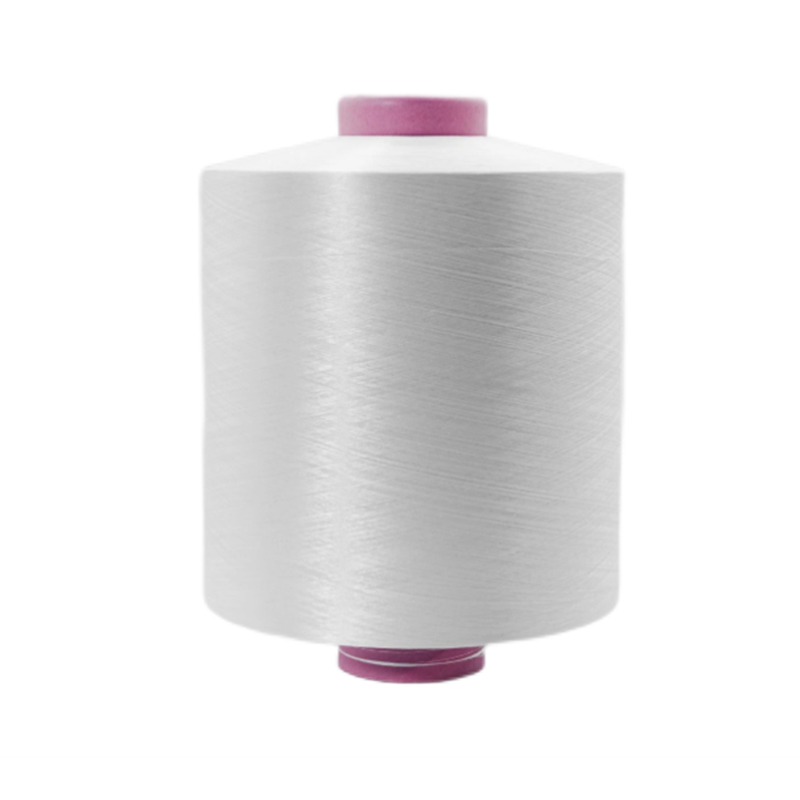
Comparing these materials requires careful laboratory testing. ACY yarn provides slightly lower maximum elongation than SCY. However, it offers a softer stretch. This forgiving elasticity fits standard sock cuffs perfectly. It also enhances arch support sections. SCY creates a snappy, sharp recovery. This sharp recovery can sometimes feel restrictive. Air-interlaced alternatives distribute the pressure more evenly. The wearer experiences fewer pressure marks on their ankles. You achieve a balanced, comfortable fit.
The core is not fully covered physically. Therefore, the thread can feel slightly more textured. We outline when this texture is acceptable. Terry socks and athletic wear benefit from it. The texture traps microscopic air pockets. This improves moisture management. It adds a plush feeling to the footbed. However, DCY remains strictly necessary for some items. Medical-grade compression garments require absolute smoothness. Sheer luxury tights also demand 100% core coverage. You must match the material to the specific product tier.
Production speeds run significantly higher. Specialized air nozzles operate much faster than rotating mechanical spindles. This translates directly to lower per-kilogram costs. Manufacturers can scale operations faster. Lead times for yarn procurement decrease sharply. You hold less inventory in your warehouse. You free up working capital. Your factory reacts faster to sudden fashion trends. Rapid prototyping becomes financially viable. You gain a massive competitive edge in seasonal markets.
Feature | ACY | SCY | DCY |
|---|---|---|---|
Production Speed | Very High | Medium | Low |
Cost Efficiency | Excellent | Moderate | Poor |
Core Coverage | Partial (Noded) | High (Single Wrap) | Complete (Double Wrap) |
Stretch Profile | Soft and Forgiving | Firm and Snappy | Rigid and Powerful |
You cannot simply swap spools without adjusting your machines. air covered yarn behaves differently under tension. It stretches unlike mechanically wrapped threads. The nodes shift slightly when pulled hard. Facility managers must calibrate knitting machines accurately. You must utilize positive yarn feeders. You should lower the input tension slightly. Otherwise, you risk "grinning." This defect makes bare spandex visible under heavy stretch. Grinning ruins the aesthetic appeal of dark socks. It also exposes the core to friction.
Color matching requires deep technical knowledge. The spandex core stays partially exposed. You see this between interlaced nodes. Dye uptake can become inconsistent. This happens if outer shells and spandex need different thermal treatments. Disperse dyes for polyester require high heat. Acid dyes for nylon operate differently. The bare spandex might resist the dye bath. We recommend using pre-dyed outer filaments. Alternatively, you can dye the fabric at lower, controlled temperatures. Always run sample dye baths before bulk processing.
We must address fabric longevity honestly. Air jets create a looped structure. This increases the risk of surface pilling over time. Tightly wound SCY resists this better. The loops catch on abrasive surfaces. You mitigate this through proper stitch density. Knitting a tighter gauge protects the delicate loops. You should also apply anti-pilling finishing treatments. Silicone-based softeners reduce surface friction significantly. Educate your quality control team to monitor abrasion results closely.
Install precise positive feeders on all circular knitting machines.
Conduct daily tension meter checks to prevent grinning defects.
Use matching dye carriers to ensure the core and shell absorb color evenly.
Apply targeted anti-pilling chemical softeners during the final wash cycle.
Selecting the right partner requires rigorous evaluation. Read supplier spec sheets carefully. You must ensure the draft ratio aligns with your targets. The draft ratio determines how tightly the core was stretched during texturing. High draft ratios yield powerful stretch. Lower ratios provide softer comfort. Specific sock styles require precise stretch minimums. Ask your supplier for detailed elongation graphs. Do not accept generic specification sheets. Demand data tailored to your specific denier requirements.
High quality depends heavily on interlacing nodes. You need consistent spacing. Irregular nodes cause weak spots in your fabric. They also trigger machine stoppages. Advise requesting visual inspection reports. Use a microscope to examine the strand. Test small cones specifically for node skipping. Node skipping leaves long stretches of bare core. This guarantees a grinning defect. Reliable suppliers monitor node density electronically during production. Ask them to share these automated quality logs.
Consumer safety remains non-negotiable. Focus heavily on skin-contact hosiery yarn. Verify OEKO-TEX Standard 100 certification. This guarantees the material contains no harmful chemicals. Ensure transparent sourcing of base filaments. Trace the origins of the raw spandex. Ask about the spinning oils used during production. Poor quality spinning oils cause yellowing during storage. They also trigger allergic reactions for end users. Demand full transparency from your supply chain partners.
Never buy bulk tonnage blindly. Mandate a strict pilot run. Follow these sequential testing steps:
Order a small 5-kilogram sample cone from the prospective supplier.
Try producing 50 to 100 pairs initially on your standard machines.
Evaluate post-wash shrinkage after three commercial laundry cycles.
Check stretch recovery using standard laboratory extension tests.
Inspect dye fastness by rubbing the fabric against white cotton cloth.
Proceed to bulk ordering only after all tests pass your internal benchmarks.
Finding the perfect balance between quality and cost defines modern manufacturing. This interlaced technology is not a universal replacement for all materials. However, it remains the most commercially viable solution available today. You scale standard and mid-tier production effortlessly. You do this without sacrificing essential stretch and recovery.
Your facility can achieve higher margins immediately. Audit your current SCY and DCY expenditure today. Identify casual or athletic lines suitable for migration. Request node-consistency data from vetted textile partners. Run thorough pilot samples on your knitting floor. Implement careful tension adjustments. You will transform your production efficiency and secure your competitive market position.
A: No. It is generally suited for light to medium stretch applications. Medical-grade compression hosiery still largely relies on DCY or SCY. Those wrapped structures deliver precise, uniform, and powerful pressure necessary for medical benefits. ACY provides a softer stretch that cannot meet strict medical compression standards.
A: Polyester DTY is preferred for high-friction athletic wear. It offers exceptional durability and lower costs. Nylon is favored for lightweight, moisture-sensitive applications. Nylon provides a smoother finish and brilliant color, making it better for premium, lightweight activewear rather than rugged sports socks.
A: It is highly compatible with seamless machines. However, you must correctly calibrate the feed tension. Facility managers need to account for the air-interlaced nodes. Using positive feeders and lowering input tension prevents the yarn from breaking or grinning during the seamless knitting process.
A: It is highly durable for everyday use. However, it may show friction wear slightly faster than tightly wrapped DCY. The looped node structure is more vulnerable to surface pilling in high-abrasion zones. Proper stitch density and anti-pilling finishing treatments help close this durability gap.